

Blog / Safety

Blog

All Safety Liberty Buick GMC GMC Buick Community Promotion GMC Sierra 1500 Service GMC Trucks GMC Sierra 2500 GMC Sierra 3500 Liberty Buick GMC Service Charity GMC Terrain Hummer EV Electric Vehicle Black Friday Sales GMC Acadia Matthews Buick Dealer Matthews Buick Service Trade-In GMC Yukon Buick Enclave Buick Encore Buick Envision Buick Envista Canyon Customization GMC Sierra 1500 EV Liberty Buick GMC Electric Vehicles Matthews Used Cars Selling Used Cars
How to Replace Your Windshield Wiper Blades Yourself | Are Expensive Wiper Blades Worth It?

It’s Hurricane Season! Replace Your Windshield Wiper Blades Today!

The humble windshield wiper blade often goes unnoticed until a torrential downpour hits or morning dew smears across your view. Yet, these essential components are your first line of defense against obscured vision, playing a critical role in your safety on the road. Worn-out wiper blades, characterized by streaking, chattering, or an inability to clear the glass effectively, dramatically reduce visibility, increasing reaction time and the risk of accidents, especially in adverse weather conditions like heavy rain, hurricanes, or even just a muddy splash from a passing vehicle. Prioritizing their replacement isn't just about comfort; it's about ensuring a clear line of sight for safe driving. Here's some insider tips from Liberty Buick GMC Service Manager, Scott Shirley Wiper blades are rubber and over time, endure a relentless assault from UV radiation, extreme temperatures, road debris, and regular use, all of which degrade the rubber or silicone element. This degradation causes the blade to harden, crack, or tear, losing its flexibility and ability to conform to the curvature of your windshield. A compromised blade can't maintain proper contact with the glass, leading to frustrating streaks, missed spots, and an irritating squealing noise. Ignoring these signs means you're driving with a built-in handicap, making every trip in less-than-perfect weather a potentially hazardous gamble. Regular inspection at the Liberty Buick GMC Service Department and timely replacement of your windshield wiper blades are simple, inexpensive acts of preventative maintenance that yield significant safety dividends. Most automotive experts recommend checking your blades every six months and replacing them at least once a year, or sooner if you notice any signs of wear. Don't wait until you're struggling to see through a downpour to realize your blades are failing. A fresh set of wipers ensures optimal clarity, allowing you to focus on the road ahead with confidence, knowing you have the best possible visibility in any driving condition. How to Replace Your Windshield Wiper Blades Yourself Replacing your windshield wiper blades is one of the simplest and most rewarding DIY car maintenance tasks, requiring minimal tools and no specialized mechanical skills. Before you begin, ensure you have the correct replacement blades for your vehicle's make, model, and year – refer to your car's manual or check an online parts finder. You'll typically need to lift the wiper arm away from the windshield until it locks into an upright position. For safety, some prefer to place a towel on the windshield beneath the arm in case it accidentally snaps back, preventing potential damage to the glass. Once the arm is secure, the next step involves detaching the old blade. Most modern vehicles use one of a few common attachment methods: a small tab that you press to release, a clip that you slide open, or a small pin that needs to be disengaged. Carefully observe how the old blade is connected to the arm; often, it slides off once a release mechanism is activated. Gently remove the old blade, noting its orientation, as the new blade will need to be installed in the same manner. Take a moment to clean the windshield thoroughly at this point, removing any grime that might immediately dirty your new blades. Installing the new blade is essentially the reverse of removal. Slide the new blade onto the wiper arm connector until it clicks securely into place. Give it a gentle tug to ensure it's firmly attached. Once both new blades are installed, carefully lower the wiper arms back onto the windshield. Before driving, test your new blades with some washer fluid to ensure they operate smoothly, quietly, and clear the windshield effectively without streaking. This simple, 10-minute task can dramatically improve your driving visibility and save you a trip to the service department. Are Expensive Wiper Blades Worth It? When browsing for replacement windshield wiper blades, you'll inevitably encounter a significant price range, from budget-friendly options to premium, high-performance blades. This often leads to the question: are more expensive wiper blades truly worth the investment? The answer, for many drivers, leans towards a qualified "yes," especially when considering factors like durability, performance in extreme conditions, and overall driving comfort. Premium blades often feature advanced materials like silicone, specialized rubber compounds, or aerodynamic designs that offer superior performance and a longer lifespan compared to their cheaper counterparts. Higher-priced wiper blades frequently boast features engineered for better performance and longevity. Silicone blades, for instance, are known for their enhanced resistance to UV light and extreme temperatures, creating a water-repellent barrier on your windshield over time, leading to less streaking and a clearer view. Beam blades, another premium option, utilize a spring steel tensioner that conforms precisely to the curvature of your windshield, distributing pressure evenly across the entire blade for consistent, streak-free wipes. These design advantages often translate to quieter operation, more effective clearing, and a reduced need for frequent replacements. Ultimately, the value of expensive wiper blades depends on your driving habits, local climate, and personal priorities. If you frequently drive in heavy rain, snow, or live in an area with intense sun exposure, the added durability and performance of a premium blade can significantly enhance safety and reduce frustration. While the initial outlay is higher, the extended lifespan and superior wiping performance can justify the cost, potentially saving you money and hassle in the long run by requiring fewer replacements. For drivers who prioritize optimal visibility and a smoother, quieter wiping experience, investing in higher-quality wiper blades is often a decision they won't regret.

At Scott McCorkle’s Liberty Buick-GMC Trucks, we want you to feel comfortable with the technology in your new vehicle and our team is here to answer any questions you may have.

Distracting Driving: Technology and Paying Attention

We’ve seen the headlines on the news- an accident caused by a distracted driver. Lives lost. Distracted driving is dangerous, claiming 3,522 lives nation-wide in 2021.  Between 2012-2021, a total of 32,657 died in distracted driving crashes.  The National Highway Traffic Safety Administration (NHTSA) leads the effort nationwide to save lives by preventing this dangerous and often tragic behavior. These statistics (from a May 2023 report) confirm that distracted driving is risky, not only to vehicle occupants, but to pedestrians, cyclists, other drivers, and properties. Updated vehicle technology is great, but it’s still up to the driver to pay attention. With newer safety features in cars and trucks, it’s easy to get acclimated to your sensors doing the work for you. While these features are geared to helping the driver with increased safety measures, don’t become complacent and let your car do the driving for you. What is distracted driving? Simply put, it’s when a driver diverts their attention away from the task of driving and focuses on some other activity which may include texting or talking on their phone, adjusting the radio or climate controls and conversations with passengers. NHTSA (2021 data) shared that eight percent of fatal crashes, 14 percent of injury crashes and 13 percent of all traffic crashes were reported as being caused by a distraction. In addition to the forementioned 3,522 killed, another 362,415 were injured by distracted drivers. 644 nonoccupants (pedestrians, cyclists, and others) were killed in distracted-affected traffic crashes during this same time period. The largest percentage of drivers involved in fatal crashes are drivers aged 15-20. In North Carolina The North Carolina Department of Insurance ( www.ncdoi.gov) and Commissioner Mike Causey shares these tips to help drivers avoid the pitfalls of distracted driving: Don’t use your phone at all while driving! That includes texting, websites, or social media. If you really need to send a text or email, pull off the road safely or select a passenger as a “designated texter.” Don’t eat while driving. Do personal grooming like hair and makeup at home, not on the road. Set your navigation systems or radio stations before you start driving. Ask someone in the car to tend to the needs of children if necessary. By the Numbers The North Carolina Department of Transportation (NCDOT) reported these crash statistics in 2020: 44,128 crashes caused by distracted driving, 18,552 injuries caused by distracted driving and 157 deaths caused by distracted driving. In 2021, NCDOT reported 18% of crashes involved a distracted driver.   NCDOT’s ( www.ncdot.gov) website shares these laws for drivers:   Cellular use: Drivers under 18 are prohibited from using a mobile phone or technology associated with a mobile phone while driving except in emergencies or when talking to a parent or spouse. Violators pay a $25 fine but receive no driver license points, insurance surcharge or court costs.   Texting: Drivers are prohibited from reading or writing text messages or emails while the vehicle is moving. Violators are subject to a $100 fine and court costs. NC Vision Zero The NC Vision Zero initiative is a state-wide program which aims to eliminate roadway deaths and injuries using data-driven prevention strategies.   It shares, “Vision Zero is a traffic safety approach focused on eliminating traffic deaths and serious injuries, while improving access to safe, sustainable, and equitable mobility for everyone. Setting zero as the only acceptable target, Vision Zero sends a strong message: deaths on our transportation network are unacceptable and preventable.” One of their safety focus concerns is distracted driving. Vision Zero shares that 87% of North Carolinians thinks is unacceptable to for a driver to use a hand-held phone while driving, they encourage people to avoid contacting loved ones while they are driving, but if you do need to reach someone who is driving devise a plan. For instance, call twice and hang-up, that can be your code for them to pull over safely knowing there is an emergency. There are three types of distractions. Cognitive (taking your mind off driving), Visual (taking your eyes off the road), and Manual (taking your hands off the wheel). More from NC Vision Zero ( www.ncvisionzero.org): Taking the phone away from your ear does not take away the risk. “Even with two hands on the wheel, using a hands-free device, such as a Bluetooth or a voice command program, distracts your brain and makes you “cognitively blind.” In fact, “the activity in the area of the brain that processes moving images decreases by up to ⅓ when listening or talking on a phone”. (National Safety Council) Multi-tasking is a myth! “Your brain cannot process two cognitively-demanding things at once, such as reading text and driving. Instead, during distracted driving, your attention shifts rapidly between two tasks. In those milliseconds between, situations can rapidly change in a moving vehicle.” Is there a safer time of day? According to the National Safety Council ( www.nsc.org): On average in 2021, fatal car crashes were more frequent on weekends, peaking on Saturday. The number of nonfatal crashes tended to be higher on weekdays, peaking on Friday. For both fatal and nonfatal crashes, the peak time of day was 4 p.m. to 7:59 p.m., but peak crash periods vary substantially over the span of a year: During the spring and summer months, fatal crashes tended to peak between 8 p.m. and 11:59 p.m. In contrast, the nonfatal crash peak is earlier in the summer, from noon to 3:59 p.m. From November through March, the peak for fatal crashes was from 4 p.m. to 7:59 p.m. No matter the time of day, it’s important to not be a distracted driver. Excuses, excuses! In an article shared in Canada ( www.driving.ca), police officers in Ottawa shared some of the creative (and humorous) excuses drivers shared when pulled over for distracted driving incidents: “I wasn’t texting, I was checking email.” “I don’t have my phone with me,” to the officer who heard a phone start to ring. “I’m only reading.” “It’s not a communication device, I’m using it as a radio.” “I was placing an important bet in Las Vegas on the UFC.” “I thought I could use it at a red light,” to the officer who recorded the driver stopped at an intersection through two red-light cycles. “You can’t give me a ticket for this. I got one last week!” “I wasn’t on my phone, I was holding it. I have to hold it. I can’t let it go.” “I have a new girlfriend and our song came on the radio, so I had to call her.” “But I had it on airplane mode.” “I’m from Toronto.” Technology is a Tool, You are still the Driver Whether you’re from Toronto or from here in Matthews, driving is a responsibility. Updated vehicle technology is great, but it’s still up to the driver to pay attention. With newer safety features in cars and trucks, it’s easy to get acclimated to your sensors doing the work for you. While these features are geared to helping the driver with increased safety measures, don’t become complacent and let your car do the driving for you. It’s important to remember that you are still the driver. Forward Collision Warning, Lane Departure Warning, Blind Sport Warning and Rear Cross Traffic Warning (back-up camera) are all great to have, we still need to use our eyes, windows, mirrors, and our common sense to keep our minds on the road. What is this technology all about? NHTSA.gov defines the most common features in today’s vehicles. Forward Collision Warning: Detects a potential collision with a vehicle ahead and provides a warning to the driver. Lane Departure Warning: Monitors the vehicle’s position within the driving lane and alerts the driver as the vehicle approaches or crosses lane markers. Rear Cross Traffic Warning (back-up camera): Warns the driver of a potential collision, while in reverse, that may be outside the view of the backup camera. Blind Spot Warning (in the side mirrors): Warns of a vehicle in the driver’s blind spot. The 2024 Buick Encore GX is just one of many models with advanced safety technology. It features a Back-up Camera, Lane Departure Warning, and Lane Keep Assist. Lane Keep Assist is newer technology, unlike lane departure warning, lane-keeping technology uses cameras to monitor your car’s position and will gently steer the vehicle back toward the center if it drifts too close to the edge of the lane. Requiring clear lane markings (and we’ve all driven country roads with no painted lines at all), it’s a great tool, but not a substitute for paying attention. Going “Old School” Do you remember your driver’s test? Three-point turns, parallel parking, adjusting your mirrors, watching for passing vehicles, turning and looking behind you before you back out, and hands at “ten and two”? Sweating profusely and hoping you’ll pass (maybe that was just me). These guidelines are still important to be a safe driver. Just as you know not to pass in a “no passing zone”, you should remember to keep your eyes on the road before you. While a forward collision warning system is an amazing tool in an emergency, it’s not meant to help you tailgate. At Scott McCorkle’s Liberty Buick-GMC Trucks, we want you to feel comfortable with the technology in your new vehicle and our team is here to answer any questions you may have. We want you to drive safely, whether you are in your new vehicle from us or your grannie’s hand-me-down roadster. Stay Alert North Carolina, and we’ll see you soon.

ADAS Service Repair Center

Everything You Need to Know About Advanced Driver Assistance Systems (ADAS)

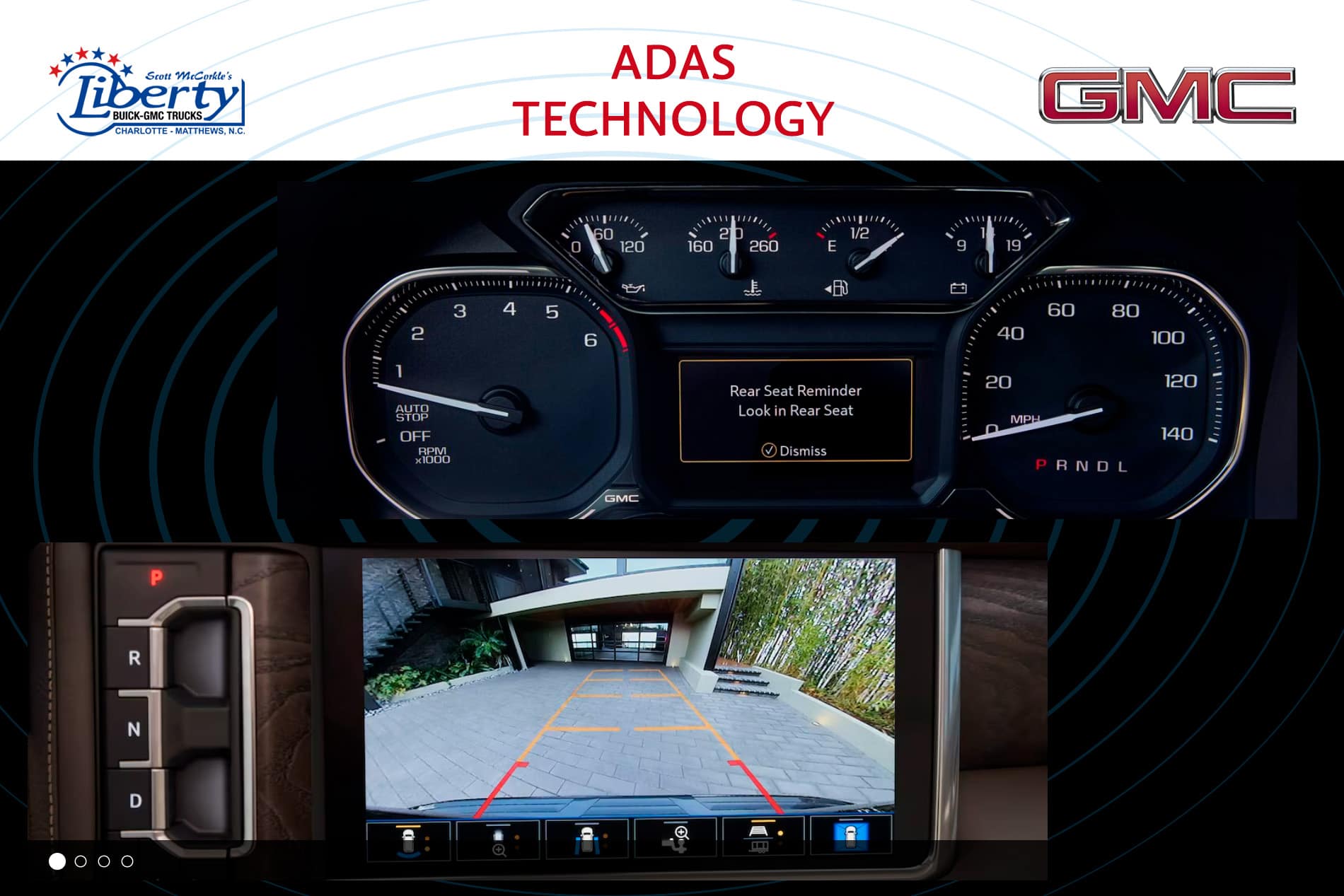
As artificial intelligence continues to advance and integrate itself into the automotive industry, we find ourselves experiencing a much different driving experience than ever before. We can now communicate with our vehicles, even before we enter the car, to heat or cool the interior, to play our favorite music and podcasts, and we can now rely on AI to take care of some of the more complicated aspects to driving, such as the act of driving itself. Car drivers are entering the age of driver assistance systems, which are AI-integrated programs created to take over some of the more laborious aspects of driving. It is safe to say that we are entering a period in time where both humans and AI team together in order to create a brand new driving experience–one that is easier and safer for everyone. Advanced Driver Assistance Systems, or ADAS, are various technologies created to improve the driving experience, namely to promote vehicle safety. This process involves the implementation of automated assistance to the driver in order to help reduce the possibility of human error. This is done by using sensors, cameras, radar, and other advanced tech features to monitor the vehicle’s surroundings at all times and to assist in various driving tasks–such as adaptive cruise control, lane-departure assistance, automatic emergency braking, and parking assistance. For some car companies, like GMC, these advanced systems are nothing new, though they are being updated often. The availability of specific assistance features can depend on the trim level and options chosen for each vehicle, but a variety of them can be found in most versions of GMC’s Sierra, Yukon, Terrain, Acadia, and Canyon. Before we get into some details on how these systems work, let’s have a look into how incorporating ADAS can benefit both drivers and passengers: Improved Safety: we can already see how ADAS helps prevent car accidents by providing safety assistance to drivers through the use of emergency braking, lane departure warning, and adaptive cruise control. Enhanced Convenience: ADAS can make the driving experience more comfortable and less stressful by assisting with tasks such as maintaining a safe distance behind other vehicles, keeping your vehicle centered in its lane, and aiding in parking maneuvers, such as the dreaded parallel parking. Reduced Driver Fatigue: by incorporating ADAS, drivers can get alerts and assistance when necessary if experiencing fatigue. These technologies can keep drivers from falling asleep and/or get them to pay attention to certain aspects of driving–for instance, if there is flooding, icy conditions, animals crossing, etc. Potential Insurance Discounts: some insurance companies offer discounts for vehicles equipped with ADAS, as these technologies have already proven their ability to reduce the likelihood of accidents and even minimize potential damage in the case of an actual collision. Environmental Benefits: certain features to ADAS, such as adaptive cruise control, can help with fuel efficiency by maintaining a consistent speed and following distance. Over time, this can lead to a drastic reduction in fuel consumption. Lower emissions means your car is better for the environment, and you are able to save money by vising the gas station less often. Assistance for Drivers with Disabilities: ADAS can provide helpful assistance to drivers with disabilities by helping them operate aspects of the vehicle through automated prompting, the use of warning lights, etc. It can also assist those with limited mobility by setting itself to take care of things like the usage of blinkers and headlights without the prompting of the driver. Clearly, ADAS plays a crucial role in improving road safety and enhancing the driving experience, and this process of technological integration is only starting–who knows what the future holds! How ADAS Works Integrated systems such as ADAS are quite complicated, but gaining a basic understanding of how they work can better inform drivers on how and when to use them. On the most basic level, ADAS uses a combination of sensors, cameras, radar, lidar, and software algorithms to monitor the vehicle’s surroundings. All of these technologies are used to assist the driver. Here is a general overview of how it all works: Sensors and Cameras– Small sensors and cameras are strategically placed around the vehicle so that they can continuously collect data on the car’s surroundings, including nearby vehicles, pedestrians, road markings, traffic signs, and obstacles. Data Processing– The data collected by sensors and cameras are processed in real-time through the use of onboard computers. These computers use special algorithms to analyze the data received in order to identify objects on or around the road, detect potential hazardous situations, and to assess the vehicle’s position in relation to the road and other vehicles. Decision Making– Once incoming data has been processed, ADAS make decisions about the appropriate actions to take so that the driver is assisted and safety mechanisms are enhanced. For example, if it is detected that the vehicle is drifting in and out of its lane without signaling, lane departure warnings and/or the steering assistant may be employed in order to alert the driver and to keep the vehicle in its proper placement on the road. Driver Feedback and Intervention– One of the great aspects to this sort of enhanced driving system is that ADAS provide feedback to the driver through visual, auditory, and haptic alerts in order to inform them of potential hazards in the moment. Not only that, but in some cases ADAS can also intervene directly by applying the brakes, adjusting steering, even by controlling the vehicle’s speed. Integration with Vehicle Controls– Most often, Advanced Driver Assistance is integrated with the vehicle’s existing control systems–like braking, steering, and throttle–so that there is active vehicle control when necessary without the prompting of the driver. Essentially, this means that ADAS does not have to wait for human interaction for it to kick in. Which makes sense if you are heading towards danger without knowing it, you want your vehicle to know to apply the brakes whether your foot hits the brake pad or not. Continuous Monitoring and Improvement– What’s so great about ADAS is that it is continuously working. It is always monitoring the vehicle’s surroundings and performance–even if you are not–and it knows to adapt and change driving conditions, and this effectiveness is actually improved over time. Manufacturers regularly update ADAS software to enhance performance, address potential issues, and introduce new safety features. One other feature we love about the incorporation of ADAS is that if repairs or calibration are needed for the ADAS system in GMC vehicles, a quick trip to the dealership is all that is required. Once on site, a certified technician can calibrate and/or repair any necessary areas. And there is no guesswork here, as your ADAS will let you know if there is some necessary repairs or adjustments needed so that there is no compromise in the effectiveness of the system. The future is upon us, and driving is about to look a whole lot different. Are you ready to incorporate ADAS into your daily driver? It’s time.

GMC Sierra

GMC and Hurricane Season

When thinking of strong tornado and hurricane seasons, your first thoughts may not gravitate to North Carolina. But preparation for these natural disasters can be the difference between safety and danger for you and your family here in the old North State. After all, according to ReadyNC.gov — “All parts of North Carolina have been hit by tornadoes, floods, hurricanes, lightning strikes, snow and ice storms. These natural disasters can cause power outages, property damage, and disruption to food and water supplies.” Not only is it important to prepare for these natural disasters, but you also need to see if your vehicle can handle them! Liberty Buick GMC has a few vehicles built to withstand even the most daunting weather patterns, so read on to learn about the safest and strongest models the dealership has provided the Matthews area for years! Tornados In North Carolina Before we get into vehicles, it’s important to understand these weather patterns. As we touched on earlier, all parts of North Carolina have witnessed these weather events, as have a number of North Carolinian vehicles. Tornados often happen suddenly, with little warning, leaving folks stuck in place when a tornado begins. The North Carolina State Climate Office reports that from 1950 to 2019, North Carolina experienced 1,387 tornadoes. Meaning that on average, we see 29 tornadoes a year. That’s more tornados than many may expect for North Carolina! To understand the impact a tornado can have on your vehicle, it’s important to know the levels of strength associated with the weather event. Tornados are often classified by the strength of their winds, ranging from F0 to F5. Once a tornado reaches F2, somewhere between 113 - 157 mph, it has the ability to pick up cars, spelling danger if you’re caught driving. While F2 is closer to the mild end of the scale for tornados, the ability to throw a vehicle through the air is a testament to its power and potential to impact you and your vehicle. Hurricanes in North Carolina North Carolina is no stranger to hurricanes — of 301 hurricanes that have made landfall in the U.S. since 1851, 58 of them have been in North Carolina. And for those who may believe a majority of those hurricanes were relegated to the cost, over the past 20 years, every part of North Carolina has been impacted by hurricanes. So planning for the weather event is a good way to keep you and your family safe. Unlike tornados, hurricanes can typically be forecasted before they happen or make landfall in an area. The Atlantic hurricane season, which impacts North Carolina, begins June 1st and ends November 30th, so the season is about to start. When a hurricane hits an area, vehicles risk flooding, damage from debris, displacement by strong winds, and much more. Take the recent hurricane Ian in Florida for example, where 350,000 cars were damaged by flooding alone. The potential for this weather event to ruin any vehicle is extremely high, especially if that vehicle isn’t prepared or the driver hasn’t taken the necessary steps to minimize risk. What to Do When In Your Vehicle If the facts and data above conveyed anything, it’s that these weather patterns are dangerous. Knowing what to do ahead of time can make the difference between life and death! Here’s what you need to do if you encounter either event while driving in your vehicle. Tornados - If you’re driving your vehicle and see a tornado here are a few ways you can mitigate chances of danger. Though, it’s generally best to seek underground and sturdy shelter, as being on the road in the open severely limits your ability to stay covered. Don’t try to outrun the tornado. Instead, try and move your vehicle out of the path of the upcoming weather pattern. Then, if you can’t find any shelter, park your vehicle in a low-lying area, remain buckled, get low into your vehicle, and cover your head and neck with your hands. Though if you can get out of the roadway entirely, specifically under the road grade, it may be best to seek shelter there. Hurricanes - Most of the time, we know when a hurricane is expected to occur, so it’s easy to avoid being in your vehicle when the weather pattern makes landfall. Though if the data from Hurricane Ian showed you anything, the likelihood of a hurricane ruining your vehicle is high. Still, there are steps you can take with your vehicle to keep it safe, while you and your family seek shelter. If a hurricane is severe enough, there’s no perfect place to leave your vehicle. The one rule that remains consistent — the higher elevation the better. Once elevated you can seek things like barns or garages that provide shelter as well as height above an oncoming flood path. Parking your vehicle next to a building but away from things likely to fall, like powerlines and trees, helps break the strong winds but keeps debris from falling on your ride. Just be sure to invest in a sturdy tarp if the vehicle is left outside! For those in more urban areas, structures like parking garages, at higher levels, away from openings, are sturdy and elevated enough to increase the chances your vehicle makes it through landfall. Once the hurricane itself subsides, your area is sure to be left with some significant flooding, alongside damage and blockages of major roads. This can make travel in some vehicles nearly impossible. Though Liberty Buick GMC offers some vehicles designed for rugged travel that can handle some of those conditions. “ When it comes to durability, the Sierra is unrivaled” - Liberty Buick Sales Rep. The Sierra is one such vehicle that comes to mind. Every trim of the Sierra is capable of unreal offroading capability, backed by 310 hp and 430 pounds of torque. And the large truck bed ensures you’ll be able to haul and move whatever is necessary. The Sierra isn’t the only vehicle Liberty Buick GMC offers that’s capable of handling tough conditions, a whole list of SUVs offer a similar level of versatility. So while driving during one of these weather patterns isn’t the safest idea, having a GMC afterward is vital. How To Prepare You may know what to do with your vehicle if you’re caught in one of these storms, though knowing what to bring and prepare with is just as important! Having just a few items in your vehicle can greatly improve your safety and give you peace of mind. First, make sure your car is properly taken care of. Oil changes, good tires, effective wipers, and more, will all make things much safer for you and your vehicle. And the team at Liberty Buick GMC is well-prepared to bring your vehicle to its top shape! GMC’s service department is unrivaled and while Liberty has a track record of leaving customers happy after a sale, they also have a record of professional service. Take Alexandra’s review for an example — Once your vehicle is mechanically sound, it’s a good idea to stock it with some non-perishable foods, water, flashlights, charging blocks, blankets, and first-aid kits. All of these supplies are especially helpful, as their usefulness isn’t just limited to tornadoes and hurricanes! GMC Safety Features We’ve touched on the importance of safety at length throughout this article and the GMCs safety suite is one of the biggest advantages GMC owners have. GMC vehicles offer Pro Safety and Pro Safety Plus, a collection of safety features that increase protection! The basic package includes things like, forward-collision warning, following distance indicator, automatic high beams, automatic braking, and lane assistance technology. While the Plus package adds a few features to an already well-rounded basic suite. Features like blind spot warning technology, rear parking assistance, and rear cross-traffic alerts, all create an industry-best safety package among a whole host of new GMC vehicles. So, if you’re looking for a safe ride, look no further! You can read more about the safety advantages Liberty Buick GMC offers through the dealership's blog here. Liberty GMC as the Tested Partner So, while you hopefully won’t have to employ the planning and preparation for major weather events you put in place, it’s necessary to think ahead. And if you’re picking a vehicle that’s ready to last, even in some difficult times, finding the right automotive partner is a must. “I invite and encourage you to join our family of friends and customers at Liberty so you can see the difference for yourself.” - Scott McCorkle, Owner If sturdy, powerful, and safe vehicles are what you’re looking for — Liberty Buick GMC is the dealership for you. With over 2,000 reviews on Google, the dealership stands at nearly 5 out of 5 stars. Their locally owned and they know the Matthews area well, looking at potential car buyers not as customers, but as neighbors looking to make a big next step! That sentiment isn’t limited to this blog post, it’s consistent among those 2,000+ reviews. Take this review from Hayley for example, as she bought one of the powerful trucks we’ve detailed in this article: So, don’t wait, get your hands on a vehicle ready to withstand whatever is thrown at it — while keeping you and your family safe. Contact Liberty Buick GMC today!

How To Prepare Your Car for Winter

How To Keep Your Vehicle Running Smoothly Through Winter

As the year draws closer to its end, the chill in the air becomes increasingly hard to ignore. The drop in temperatures makes more and more drivers dread those morning run to their cars. But drivers aren’t the only ones struggling — chances are your vehicle isn’t a big fan of the winter either. So, how do you ensure your vehicle can make it through the winter months, especially while keeping you warm and tackling some brutal weather conditions? It may not sound easy, but the professionals at Liberty Buick GMC have you covered with some helpful tips to protect your vehicle, both mechanically and aesthetically. Don’t just worry about the chill; prepare to protect yourself and your car during the colder months! For Those Who Don’t Live in Harsh Winters Drivers who don’t live in traditionally “cold” areas like the Northeast or Midwest may skim over cold weather tips. After all, extremely low temperatures are rare and less sustained outside of those regions — right? Surprisingly, short periods of extreme cold can do a comparable amount of damage to your vehicle, especially when temperature spikes. As such, people in traditionally warmer climates should be aware of those radical drops in temperature and prepare much like their Northeastern counterparts when necessary. Here’s the bottom line: Even if you don’t live in the Northeast, showing your vehicle some extra TLC going into winter will ensure it has a long and productive future. Invest in Winter Tires If there’s a chance you’ll be driving during a cold winter, investing in winter tires is a must. Winter tires are made with softer rubber that allows for more flexibility when temperatures drop. The change in material accompanied by unique tread patterns and wider grooves allows for easy driving on icy or snowy roads. It’s also important to note that having four winter tires is better than two, with two winter tires actually leading to less traction because of the mismatch in treads. People who live in areas that receive snow just once or twice a year may feel less inclined to spend big on specialized tires. Still, it’s necessary to ensure the tires you have on your car are in good shape. Worn-out tires have less traction, which can be the difference between a safe drive and a dangerous one in winter. If you can’t tell if it’s time for a tire replacement, use the penny trick! Simply place a penny in the tread of your tire. Make sure the penny is positioned so that Lincoln's head points down into the tire. If the top of Lincoln's head isn’t visible, your tread is still okay; if not, it may be time to buy some replacement tires. If you find that you need new tires, don’t fret — Liberty Buick GMC has you covered. Our Tire Center is well-prepared to provide brand-new, affordable tires to last several winter seasons. As our tire department states: “Your vehicle's tires are the first and only contact with the road, so it is important to choose the right set when replacing them.” If you don’t know what kind of tires your vehicle needs, we’re more than equipped to help you find the perfect match. Just touch base with a Tire Center professional today! Wash Your Car Frequently Washing your car is a task everyone can relate to putting off, but it carries extra significance in the winter. There are a few key reasons to keep your car clean during the winter and ensure a long vehicle lifetime. One reason to wash your car is to remove road salt build-ups because road salt is terrible for your car. The average state spends 20% of its maintenance budget on winter road care, and that amount of money translates into a lot of road salt being put onto our roads. This substance may make your driving experience safer, but it spells trouble for your vehicle. Road salt creates a chemical reaction that causes corrosion and rust, with the exposed metal parts of your car being most at risk. But the corrosion isn’t limited to exposed metal; it can damage your vehicle’s clear coat, paint, undercarriage, and brake and gas lines. Here’s the main takeaway: Keep the road salt off your car and on the road. Washing doesn’t just eliminate salt; it reduces grime and buildup which can limit or reduce visibility. In the wintertime and when driving in less-than-ideal weather conditions, visibility is often the difference between a safe drive or an accident. Keeping grime and salt off your windows, mirrors, and headlights will increase your visibility and safety. Drive Smart Each year, 24% of weather-related automotive accidents occur during snow or ice. While some of those accidents could be avoided by following tips related to vehicle maintenance, others could have been prevented by employing safer driving practices. Adapting the way you drive is a necessary practice to maximize the safety and protection of your vehicle during the colder months. Icy and snowy conditions severely impact the amount of time it takes to bring your vehicle to a full stop, so increasing the distance between the car in front of you and your vehicle is an excellent first step in adopting safer practices. Similarly, it’s a good idea to decrease speed in icy conditions due to the lack of traction. Outside of those tips, you’ll want to know what to avoid when driving in winter. Here are a few things to look out for: Avoid puddles and potholes. They may not seem dangerous, but you never know what puddles and potholes are hiding. They collect salt and dirty water that contribute to the corrosion we discussed, but they can also be much deeper than they appear and cause severe damage to your car and/or tires. And when it’s colder, they can turn into slick ice spots that impact your traction on the road. Avoid driving in deep snow. Much like puddles, you never know what deep snow could be hiding. Deep ruts, low-bearing shoulders, and more can be obscured by snow, leaving a driver and their car at risk. Packed snow that’s been on the ground for some time also contains a lot of salt and grime, which can undo all that car cleaning and prepping you spent so much time and money on. Further, driving through deep snow can pack snow into your wheels, causing them to shake in transit. That's not good for you or your car; so if you notice it, get to the car wash immediately! Avoid parking on the street. Parking on the street in the winter puts your car on the frontline of the salt spray and snow scrapes. Snow plows could push deep snow against your car, and even if you luck out on that front, the salt spray can cause severe body damage if you don’t wash it off immediately. Whatever the case, it’s a good idea to move your car if you know a winter-weather event is on the way. Stock Your Car With The Right Tools We’ve covered what you can do to the outside of your car to ensure it’s well taken care of, but what about the inside? Preparing something like a winter-driving safety kit can go a long way in protecting you and your vehicle. Here are a few essential things to keep in your car throughout those cooler months that will make driving much easier and safer: Ice Scraper: As we touched on earlier, visibility is everything in bad weather conditions, so getting that morning ice off your car is a must. Invest in a well-designed, reliable ice scraper. It’s a tool you’ll often use, so relying on a cheap product can cause headaches! A Small, Collapsible Shovel: You never know when your car will get stuck or surrounded by deep snow. Keeping a collapsible shovel in your vehicle ensures you can dig yourself out of tough situations, instead of pushing your car to the brink of damage. Sand or Kitty Litter: This one might seem strange, but it can be a real lifesaver during a snow or ice storm. Using a coarse material around your tires can provide extra traction and get your car out of a sticky situation. Jumper Cables: Colder temperatures can affect your car battery and put your car in a situation where it needs a jump. Having cables on hand makes that as easy as possible and keeps your car charged and running all winter long. Portable Air Compressor: Tires are everything in the winter. After all, they connect your vehicle to the road! It’s essential to monitor your tire pressure and keep a tool handy that can bring the tire pressure up to its recommended level. Liberty Buick GMC You should have a winter accompanied by a well-running vehicle if you employ these tips. Still, some vehicles are more equipped than others for challenging weather conditions. If you worry about your vehicle every time the weather cools, it might be time to invest in a new GMC that fits any road condition. SUVs like the all-new Acadia and trucks like the Sierra offer next-generation off-roading and winter weather capabilities. And those two models only scratch the surface of GMC’s ambitious 2023 lineup. Moreover, if you count yourself among the millions of people who own a GMC, now may be a good time to get it serviced and examined as weather conditions worsen. Our dealership is more than equipped to provide an excellent car buying and servicing experience. If you’re ready to prepare for the winter months, don’t hesitate to connect with Liberty Buick GMC today and get your vehicle ready for any season!

GMC Safety Charlotte NC

GM Seeks Out New See-Through A-Pillar

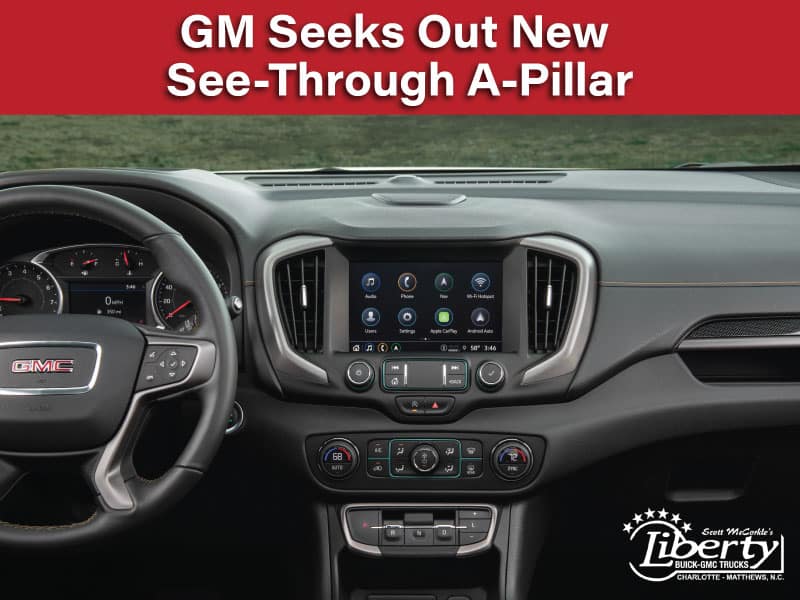
GMC has long been a leader in safety innovation and part of being a leader is continuing to push the standard. It’s known that GMC has safety measures like rearview camera mirrors, advanced sensors, and adaptive cruise control, and while those features are necessary when improving the safety of a vehicle, they’ve become somewhat standard in most modern models. This leaves a lot of room for improvement and innovation. GM has delivered, with the filing of a patent for a transparent A-pillar. Its implementation would result in more control, visibility, and overall a safer driving experience for GMC owners. And while that promise is exciting it may be necessary to discuss just what the A-pillar is and the problems it has historically posed for drivers. Chances are if you’re interested in the safety potential of reimagining the A-pillar, you likely want a vehicle that’s built for safety. If that’s the case — there is no other car manufacturer like GMC when it comes to a commitment to safety. Take a look at GMCs 2022 lineup at Liberty Buick GMC and see some of the market's safest models. Understanding the A-Pillar The A-pillar is the two structure bars that are upright and frame your windshield. Essentially the two pieces that vertically connect the windshield to the car’s roof and dash. While that piece of engineering is absolutely vital when it comes to making sure your windshield is secure, it’s been known to obscure a driver’s view and create additional blind spots. The severity of the blind spot can vary from car to car, but oftentimes it increases the risk of not seeing a pedestrian, biker, or small car because they can often disappear behind these larger modern A-pillars. The blindspot the A-pillar creates is not often discussed, leaving drivers unaware of the importance of checking it, and many car manufacturers uninterested in solving the problem. The issue of the blind spot is further exacerbated when you realize that A-pillars have grown in recent years due to their ability to improve the structural safety of the car. That dynamic poses an interesting question — “How do you eliminate the risk A-pillars create while also maintaining a safe and structurally sound vehicle?” GMC’s recently filed patent seems to be the first answer to that question. The Solution GMC’s solution is to keep the A-Pillar, but eliminate the blindspot, so they let drivers have their cake and eat it too. They’re planning on doing this by making the pillar see-through, according to recently filed patents. Recent advancements in available materials seem to have made it possible to maintain structural integrity while eliminating visual barriers. While other car models and manufacturers have attempted to solve the problem through the placement of cameras and other indicators, nobody until this point had looked to reimagine the A-pillar as a whole. Here are some of the details of the innovative design taken from GMC’s patent which describe it as a — “novel fiber reinforced composite A-pillar that includes one or more designed openings impregnated with a transparent resin or composite…” If you find yourself worried about potential overexposure to the sun because of this increase in transparency, GMC already has you covered. The patent goes on to explain that the — “transparent material is selected from materials having a transmission coefficient of at least 50 percent for light in the infrared (IR), visible, ultraviolet (UV) wavelengths and a refractive index between 1 and 2 for visible light, such as polymethylmethacrylate (PMMA) or an optically transparent polycarbonate." As it stands now, no model has been tapped to play host to this innovation and it’s likely that GMC will not engage in speculation. Still, it does exemplify why GMC continues to lead car manufacturers in safety innovation and further displays the brand's ability to think outside the box in order to bring the best driving experience possible to every member of the GMC family. Other Ways GMC Invests In Safety If one thing is clear, it’s that GMC is invested in the safety of its models. And while the A-pillar patent is a good example, it isn’t the only one. One of GMC’s most exciting new safety measures is its Pro Safety Package. GMC’s Pro Safety Package is a suite of features included across most of its modern models. Those features are designed to make driving easier, reduce the chances of accidents, and maintain safety for those in and around your vehicle. Below are the features that are becoming standard in every new GMC model — Forward Collision Alert: Through the utilization of cameras and sensors, GMC cars will notify you when you’re at risk of an accident. Using lights and sounds, you’ll be sure to know when an accident is about to occur, giving you a chance to brake or move away from any potential risk. Front Pedestrian Braking: Tied to GMC’s automatic emergency braking, front pedestrian braking is designed to stop your vehicle from hitting or injuring pedestrians that may be at risk. Automatic Emergency Braking: As mentioned above, automatic emergency braking will apply brakes in potentially dangerous situations. Typically employed after the collision alert, automatic emergency braking prevents any collisions by braking for you or allowing you to brake harder than you would in a vehicle without the feature. Lane Assist With Departure Warning: Lane assist monitors your vehicle and where it’s at on the road, keeping you in your lane and away from danger. Departure warnings let you know when your vehicle has drifted and lane assist will give you a light steering wheel movement to keep you on course. Following Distance Indicator: Following distance indicators let you know when you’re following a vehicle too closely, and likely putting yourself in a situation in which you couldn’t stop in time. Which helps ensure you’ll always be driving in a situation that allows for maximum control. Intellibeam: Intellibeam systems allow your vehicle to switch between high beams and regular lights depending on what vehicles are around you. This helps improve your field of vision at night while also being considerate of other drivers. As you can see, GMC’s Pro Safety Package makes use of every aspect of modern safety technology, creating a slew of features that will make your driving easier and safer. If you’re having trouble figuring out which GMC vehicle has this set of features, you can check out the digital model showroom or reach out to our qualified dealer with your question here. Liberty Buick GMC If you’re looking for safe GMC models, there’s a dealership choice that’s clear — Liberty Buick GMC. Finding the right vehicle to purchase can be nearly impossible, and if you’re committed to finding one that you and your family will feel safe in the challenge is increased. The professionals at Liberty Buick have the expertise to show you a vehicle that has all the safety features you may want, and sometimes those with even more. And while the implementation of see-through A-pillars seems like a thing of the future, a dealership that will treat you right can be something that happens right now. Schedule a showing or appointment with Liberty Buick GMC today and get the top-of-the-line innovative safety measures you’ve always wanted.

GMC Vehicle Safety Tips

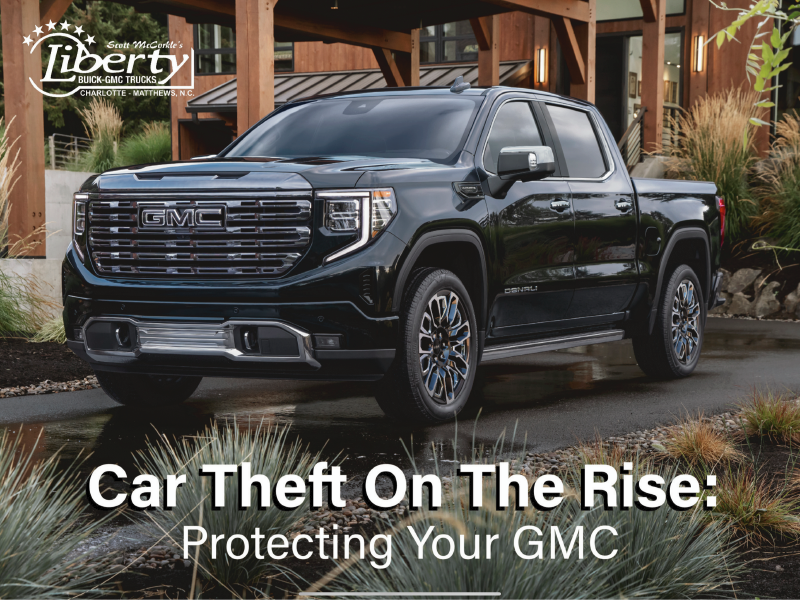
Car Theft On The Rise: Protecting Your GMC

Car theft has seen a sharp increase over the past few years and more than ever people are looking for ways to keep their precious vehicles safe. 2020 marked a peak in car theft and early measurements from the 2022 calendar year have signaled that 2022 is poised to pass its predecessors in rates of car theft. Some counties across the country have reported upwards of an 80% increase in car theft compared to 2021. Even more worrying, the trend shows no sign of stopping, with many analysts predicting a continuation in car thefts as time progresses. There is, however, some good news. You don’t have to wait for something terrible to happen to you or your car, you can take some steps to ensure that your vehicle is protected, giving you peace of mind and preventing your vehicle from being one of the many that are contributing to the car theft increase. Furthermore, car manufacturers are more cognizant than ever of the importance of vehicle protection. Manufacturers like GMC have worked hard to improve safety and security technology, designed to protect your investment. And dealerships like Liberty Buick GMC are ready to provide you with a secure vehicle, at a deal. So, as you read about our tips to keep your vehicle safe, consider buying a model with the technological suite that’s built for just that. Tips and Habits That Will Protect Your Car When you’re away from your car, you may feel a sense of anxiety. Few investments that cost as much as a vehicle are left outside for all to see, and for those unlucky, for anyone to tamper with. Here are some ways to limit theft when you’re not around. Lock Your Doors While it may seem obvious, you’d be surprised at the sheer rate of car thefts that occur because the vehicle is unlocked. Very few car thefts involve the use of force, oftentimes they are a result of an individual simply walking around and checking door handles. As a rule of thumb, cars that are locked are much less likely to be stolen from than those that are unlocked. So, even if you feel like you’re certain your vehicle is locked, it’s a good idea to get into the habit of double-checking. Keep Your Keys Out of An Unattended Car Leaving keys in the ignition, inside a locked vehicle, or a spare key inside your glovebox are all incentives to would-be car theft perpetrators. Whether the vehicle is running, or there’s a small indicator that a spare may be in the glove box, you’re much more likely to experience theft and even outright carjacking, given the ease of access. Close Your Windows Much like locking your doors, this tip may seem obvious, but open windows drive a large portion of cases of car theft. Any amount of opening in a window leaves an opportunity for theft. You may be surprised at just how little the window needs to be open for someone to take advantage of it. Making another habit of checking windows is a great way to improve car security. Don’t Leave Valuable Belongings In Your Car If valuables are visible in your car, the chances of car theft are much more likely. It’s important to remove anything of value, and, if you have nowhere to move the valuables, obscure them as much as possible from any potential passerby’s sight. Devices That Enhance Security If you’re already practicing the habits that increase vehicle security but still have concerns, there are additional devices and technology you can invest in that will further protect your ride. As technology advances and changes are made to existing key FOBS, customers may have some hesitations about potential hacks into their remote systems. Here are some devices to close those gaps that exist in some modern vehicles’ digital locking systems. Steering Wheel Brake Locks While steering wheel brake locks are often considered a dated technology, there’s been an increase in their utilization in recent years. The rapid digitization of modern vehicle locking systems has left many wanting a more tangible sense of security. Enter the steering wheel brake lock — a device that renders your car immobile for anyone without a key to the lock itself. The designs range from colorful and in your face, and sleek and unrecognizable. So, if you’re looking for a display that deters or a lock that will surprise any potential vehicle theft, you have options. Wheel Locks Wheel locks have historically been deployed as punitive measures against parking violators, so this recommendation may come as a bit of a surprise. Still, there are some wheel locks designed for drivers, meant to deter any level of theft, and also give the owner an extra sense of security. Various models exist, so you’ll be sure to find one that fits your vehicle. Though a commonly reported drawback is the need to get on the ground in between locking the wheel lock. Though if you have no qualms about getting down, it may be easier to operate than the steering wheel lock. GPS Systems The GPS system is one of the most iconic choices when it comes to car security. GPS systems have seen huge advancements in the past few years, with modern ones coming equipped with the ability to read vehicle diagnostics, calculate fuel efficiency, and provide real-time movements. If your car was ever stolen, you would know exactly where it was at every moment. Needless to say, a reliable GPS system ensures that you’ll have the necessary knowledge about your ride, no matter what a bad day brings. GMC’s Security Systems You can employ countless safety measures to protect your vehicle but one of the deciding factors in vehicle safety is the foundation you’re building on. Being a member of the GMC family guarantees you have a strong base of vehicle security, with a number of features GMC uses to keep your vehicle safe. Movement Based Systems are created to detect and alert you when a door is opened or a window is broken. Stopping a theft as it’s occurring. Ignition Systems shut off fuel supply if they detect an unknown key. Something that’s made to stop hackers or those taking advantage of new technology. OnStar Tracking Systems are designed to keep you updated on the location of any missing vehicle. So, if your next choice of vehicle is in the GMC lineup, you’ll have some added confidence when it comes to the security around your investment. Liberty Buick GMC – The Safe and Secure Choice And while we can write and discuss ways to increase the safety and security of your vehicle, the answer to which dealership is the safe and secure choice is much more simple — Liberty Buick GMC is well equipped to give you the best car buying experience possible. Understanding that joining the GMC family is much more than buying a new car. It’s joining a brand that’s employed every element of technology to maximize pleasure, safety, and style in modern vehicles. If you’re interested in taking a look at what Liberty Buick GMC has to offer, consider scheduling an appointment or viewing their digital model showroom. Both are options that will let you see the GMC lineup up close and in considerable detail. So, unlike double checking your doors locked or your windows or up, you can ride off the dealership without a second thought, knowing you went with the dealership with expertise and a track record to prove it.

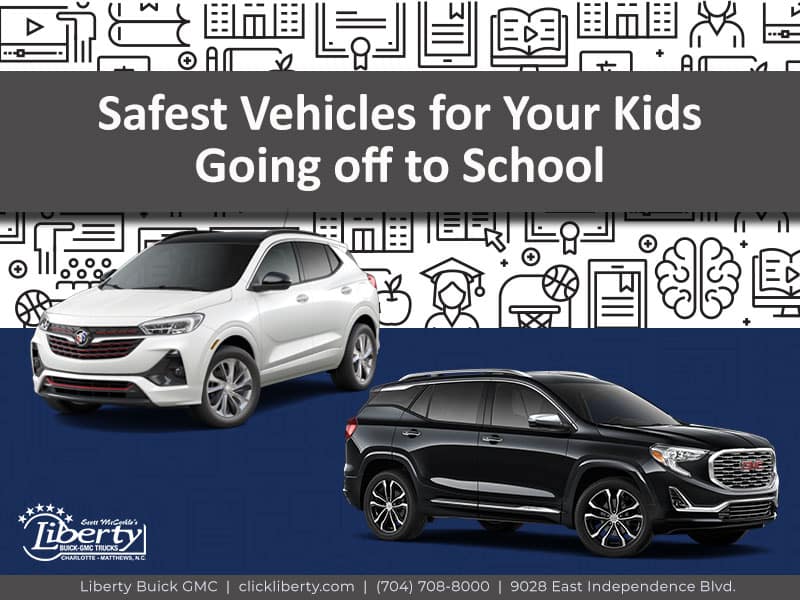
Safest Vehicles for Your Kids Going off to School

Looking for the best back-to-school car means trying to find safety, endurance, and reliability all wrapped up in one vehicle. You want your kiddo rolling out of the driveway in a car that puts everyone at ease and both Buick and GMC have exactly what you need. There are a few worthy cars for your child who’s off to school. It has to have great gas mileage, it needs to be roomy enough—but not too big; and, most importantly, it needs to be safe. Let’s look into each of these further: Fuel Efficiency Sending your graduate off to college means they will be traveling a lot. More than likely they will come home for Winter break, Summer, and whenever homesick. To lower the cost of driving back and forth, consider a hybrid. Within the past five years alone, hybrids and all-electric vehicles have soared in popularity and production. The advancements that have been made with these vehicles—and the fact that more and more car companies are producing electric/hybrid versions of our favorite vehicles—is plenty cause to go this route, not to mention the tax breaks! Car Size Remember having to choose between a large vehicle or one with good gas mileage? Not the case any longer. As mentioned above, the increase in e-vehicles has helped lower the amount of fuel used on sedans, but also trucks, SUVs, crossovers. When it comes to the size of the vehicle, what you need to consider is the driver. You know your young adult, you have watched (in panic at times) him drive, and you know what she can handle. Go with that knowledge. If you have a kid who is able to park and handle a larger SUV or truck, go for it. If a sedan or smaller crossover is more his or her speed, go with that. Cargo Space No matter the size of the car you end up with, make sure there is enough room in the back. College students move so many times it’s hard to keep track of where they are: from dorm to dorm, apartment then back home for the Summer. Instead of paying for a moving service or vehicle, the amount of cargo space in your recent graduate’s vehicle can save time and money. When looking for a car for your soon-to-be college student, cargo space is everything. Safety One of the biggest concerns parents have with sending their recent grad off to college is safety. Thankfully, modern vehicles are safer than they have ever been with the use of 360-degree radar and camera views; smart technology that senses possible collisions before they even happen and can even help correct steering—or wake up the driver! There is an exhaustive list of new safety features and more features to come, all of which can be tailored to your young driver’s liking. Buick Encore GX The sleek new Encore GX has quickly become all the rage. An already successful crossover vehicle, the 2021 Encore GX arrives with a brand new look, feel, and size. The all-new Encore GX fits itself perfectly between the subcompact Encore and the compact Envision, in terms of size, and it makes big moves by way of upgrades, all of which are great for your soon-to-be long-distance driver. Buick brings excitement to the crossover market, which your son or daughter will like. Crossover vehicles (a modern morphing of a sedan and an SUV) have now become such a part of our lives, it seems that’s mostly what we see out on the roads. It’s no surprise car manufacturers have taken notice of this, and we are seeing the crossover market grow at an incredible rate—in particular, smaller crossovers. Vehicles like the Jeep Compass, Mitsubishi Eclipse Cross, the Subaru Crosstreck, and the soon-to-arrive Mazda CX-30 are all creating their own habitat within the crossover family. The 2021 Buick Encore is a perfect addition to this lineup; only it’s not just another pretty face. The new Encore GX takes the lead by adding extra style, luxury, and technology to the standard Encore, making it a perfect fit for a young driver. GMC Terrain The new GMC Terrain is being praised for its seamless transitions between gears and its smooth, quiet ride, which is why we suggest this for those venturing out a ways from home. The Terrain is particularly regaled for its roomy interior structure, showcasing a truly luxurious cabin. After taking a test drive, one of the first things you will notice is its uncanny way of keeping outside noise out and inside noise in. Another aspect that helps with long road trips is the wonderfully comfortable seats—five in all (two bucket and a bench behind), and they are able to keep the rider comfortable for extended periods of time, as well as anyone else along for the ride. Additionally, there is more than enough leg, head, and cargo space, proving itself more than capable of making any trip easy and relaxing. The new Terrain comes standard with Bluetooth, a rearview camera, and a large display screen with USB port access. It also comes with the option for a Pioneer audio system, leather upholstery, GMC’s IntelliLink infotainment system, and rear parking sensors, allowing for access to nearly anything one could need while driving. And there are more features (safety and others) for you and yours to choose from. Our Service Department Don’t forget about our service department either. If your child already has a dependable vehicle, you will want to have it serviced—give it a good once-over at the very least—before he or she heads off to school. During the hot summer months extreme temperatures, especially here in the South, can wreak havoc on your car in all sorts of ways. This is why the service department at Liberty Buick GMC is running summer specials to make sure your college-bound child doesn’t get stranded on the way to campus. When temperatures reach the 90s or above, it’s inevitable, your vehicle will be affected. Everything from tires, down to windshield wipers, the heat does its damage. The summer sun can warp, loosen, even melt those softer materials. And it can fade or crack the harder pieces of the vehicle. Some of these things you can check on your own. Engine coolant, oil, windshield wiper fluid, and tire pressure are all pretty easy and quick to check. And you should every few weeks. Especially the engine coolant and oil. Low levels of either one of these can cause major damage to your car. But what about the more technical parts of your vehicle? Things like tire rotation, tire alignment, battery testing, and a complete vehicle inspection. These tend to be the things that go wrong during the summer, mostly because they are not easy to check. And you don’t want any family member driving without knowing everything is in its right place and operating properly. Our service professionals will complete a thorough search of your car to make sure the youngsters are in good hands. Here are just a few of the specials running this summer at Liberty’s service department: • 5-quart oil change, 4-tire rotation, and multipoint vehicle inspection for $39.95 • ACDELCO professional brake pads installed for $99.95 per axle • Free battery test and inspection • Free multipoint inspection • Tire rotation for only $14.95 • Four-wheel alignment for $59.95 And these are not all. It’s just not worth taking the risk this summer, especially when Liberty Buick GMC’s service department is running specials with prices this good. Be sure and schedule your appointment soon, and stay safe on the road to success!

GMC Dealer in Charlotte NC

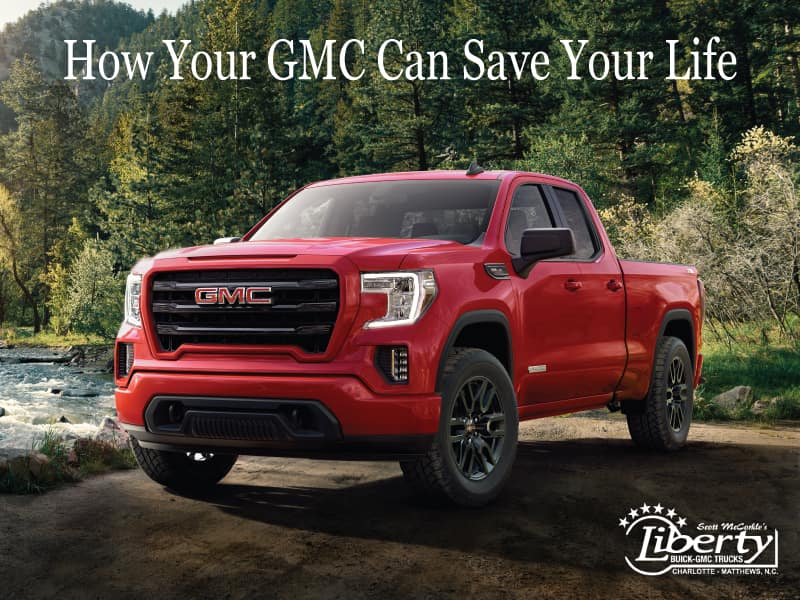
How Your GMC Can Save Your Life

Choosing the right vehicle is not only about taste, it’s also about safety. Luckily, with car companies like GMC, you can have both! Style, safety, and performance are three very important foundational factors to every vehicle produced by GMC. At Liberty Buick GMC, we are excited to share the GMC brand’s three levels of safety so you can see for yourself just how dedicated this car company is to produce the toughest and safest vehicles on the road today. It’s one thing to produce a myriad of safety features for a product, but it takes a bit more foresight to cull those features into categories—levels, even—of effectiveness so that the customer can see exactly how these methods piece together to keep those riding inside the vehicle safe. Categorizing safety features is also a great way for customers to choose the ones that are best suited for them. To make things easy, GMC has broken down its approach to driver (and passenger) safety into three levels: See It, Sense It, and Help Prevent It. GMC’s Three Levels of Safety See It. Basic safety begins with what you can see, and luckily GMC has grouped together various monitoring systems so you can see way more than only what’s in front of you. Here is what GMC has to offer: · High Definition Rear Vision Camera Remember how excited we all were when the first rear vision camera came out—that grainy, black and white video feed? Now, not only is the digital video in color, but it's also in high definition. This camera gives a wide view of the happenings behind you, all right there to see on the Infotainment display screen. · High Definition Surround Vision This digital bird’s-eye view comes at high definition and gives a crystal clear image of the area around your vehicle—when driving at low speeds. The image of your area pops up on the Infotainment display, helping you to avoid objects and perfectly park in just about any spot. · Hitch Guidance with Hitch View Using the Rear Vision Camera, this special feature enables you to align your GMC with a trailer by using a zoom camera that can pan and tilt. Not only that, once the trailer is connected and you are driving down the road, you can view the trailer while driving. · Rear Camera Mirror What we like about this camera is that you can use it inside the mirror or you can use the camera mirror display, which gives a clear, wide image and you can zoom and tilt vertically. Sense It. Now that we have your visuals covered (by allowing you to see all around your vehicle in real-time), what about those sticky situations where you can't see? GMC thought of that too and has provided some amazing sensory safety technology. · Following Distance Indicator This clever tool is set to keep you at a particular distance behind the vehicle in front of you (you can readjust the setting to be closer or farther if you'd like). If your car creeps up too close, the Following Distance Indicator will alert you immediately so you can quickly apply the brake. · Forward Collision Alert Similar to the previous feature, Forward Collision Alert uses sensors to indicate the space between you and the vehicle ahead, only this detects and alerts when a front-end collision is imminent—for instance, if the vehicle ahead is at a complete stop as you come upon it, the FCA will give you more time to apply the brake. This is one feature you hope to never have to use, but it's one that can definitely save lives. · Front and Rear Park Assist Park assist detects objects or people around you when you are driving at low speeds—typically, used when parking or navigating through congested areas. We have found this feature to improve even the worst of parallel parkers. · Lane Change Alert with Side Blind Zone Alert Have you ever noticed a little light that appears on the side mirrors of other, newer, vehicles as you pass by them? That’s what this is. Anytime a car pulls up next to you whether you are moving at high or low speeds, a light will appear on your side mirror to let you know that, even if you can’t see it, there is a vehicle beside you. · Lane Departure Warning This warning feature can be turned on or off by the driver, and it’s perfect for long drives, as it helps to keep you from drifting out of your lane. When you are driving, and you begin to veer, the steering wheel will tighten up (not completely, just enough to get your attention) so you know to correct. If you are changing lanes, simply put the blinker on to disengage the Lane Departure Warning. · Safety Alert Seat This specialized seat vibrates and pulses at the bottom for various warnings—this is an option instead of having auditory or visual warnings. This is a great option to keep you safe when you have a car full of talkative kids, or you feel like blasting your favorite song. Help Prevent It. The most advanced safety technology is that which can presuppose possible accidents. Check out what GMC has to offer in this high-tech area: · Adaptive Cruise Control—Advanced This is one of our favorite safety features, as it enhances the regular cruise control by incorporating specialized sensors and radar technology so that your car can adapt to the driving conditions around it. For example, once you have set the preferred distance between your car and those ahead of it, Adaptive Cruise Control—Advanced, will speed your car up or slow it down in order to maintain that distance. · Enhanced Automatic Emergency Braking When driving below 50 miles per hour, this feature will alert you if there is the potential for a front-end collision, and it will also automatically apply emergency braking if the driver does not respond quickly enough. This feature works for pedestrians as well. If the Enhanced Automatic Emergency Braking system detects a person, or people—even animals—it will alert and begin braking. The Importance of Basic Safety With more drivers on the road than ever before, knowing you are safe while traveling is of increasing importance. Modern, advanced safety features are doing wonders to keep us safe, but it’s also important not to forget two basic safety steps: 1. Buckle Up—and Stay Buckled. It’s such a simple thing to do and it can save your life, yet 11.5 percent of Americans do not buckle up. Once you do hear that click, make sure you stay buckled while the vehicle is moving. It can be tempting once a child starts crying, or a pet gets loose, to unbuckle and quickly help out. But it’s always best to simply pull over, stop the car, and remedy the situation safely. 2. Have the Car Right Seats for Children. If you have small children, you know not all car seats are the same in terms of quality, and it may take a little research to find the best one for your child—Consumer Reports has reviews on all the top brands. Once you do find the right one for your kiddo, have it installed professionally to learn the correct procedure (currently, over 40 percent of car seats are installed incorrectly!). At Liberty Buick GMC, we are all about safety. If you have any questions about the features mentioned, and/or if you want to know which safety features will best benefit you and your family, come see us or visit us online! Stay safe!

Easy Tips for Prepping Your Vehicle for Winter Weather

Coming up on the Thanksgiving holiday means more than preparing to down way too much food and see extended family for the first time in a year. In many areas, it’s also the perfect time to get your vehicle ready for winter weather. Not only do you want your vehicle to make it through the next few months unscathed, but you want to ensure that you and your family stay safe. Whether you’re dealing with snow, sleet, freezing rain, and/or blistering temperatures, here are some simple ways to prepare your vehicle (and yourself) for winter: Watch the Tires Having reliable tires is critical to your safety, particularly in winter weather. Once the temperature drops, it can cause your tire pressure to drop significantly. At least once a month, check the PSI in your tires and add air if necessary; typically, you can find the ideal PSI for your vehicle inside the driver's door jam. Also, check the tread on your tires. Place a penny between the threads, and if you see Lincoln’s forehead, the tread is too low and you will need to replace your tires. Furthermore, if you live in an area that gets severe winter weather, such as in the northern United States, you might consider getting winter tires. Check the Windshield and Wiper Blades Another thing you want to do is to check your windshield for any cracks, which can quickly spread once the temperature drops. Even if you spot a small crack, get it looked at by an expert as soon as you can. While you’re at it, have new wiper blades installed so that you can ensure you’re ready to drive in the elements. Inspect the Lights When driving in snow, freezing rain, and other winter conditions, it’s essential to have functioning headlights and tail lights. If your headlights have issues, it can significantly hinder you from seeing what is in front of you, especially at night. And without your tail lights or brake lights working properly, it can quickly lead to accidents with other cars. Test the Battery Cold weather is hard on batteries, and it tends to decrease their capacity. Be sure to get your vehicle's battery checked by a certified repair shop to ensure that it can hold a charge. Also, ask them to remove any corrosion from the connections and posts. Along with getting your battery serviced, keep a set of jumper cables in your vehicle as a backup plan. Give Your Vehicle a Wax Coat Road salt is essential to driver safety during winter weather. But due to its corrosive nature, it can be hard on your vehicle’s exterior over time. Adding a coat of wax can help prevent extensive damage to the exterior of your car. When applying wax, focus on the lower areas of your vehicle where salt, snow, and ice set in; this includes behind the front grille, wheels, and quarter panels. Try Winter-Grade Oil Another thing to consider when prepping your vehicle for the cold months ahead is the engine oil you use. Generally speaking, the lower the viscosity, the better during winter. So, before the weather gets too frigid or harsh, consider switching to a thinner winter-grade oil; the viscosity of the oil you are using is identified by the first number of the oil specification. For example, 5W-30 oil is ideal for winter while 10W-30 is a little too thick. Keep an Emergency Supplies Kit Even if you thoroughly prepare your vehicle for winter weather, you can’t 100% guarantee that you won’t break down on the side of the road or get stuck in the snow or ice. That’s why it’s essential to arrange an emergency supplies kit that you keep in your car. This kit should include any items you think you might need in the event that you are stranded without a working vehicle. Here are some examples of items to consider: Extra winter clothes and outerwear Gloves and boots A blanket (preferably heated) A first-aid kit Non-perishable foods and jugs of water A portable charger for your smartphone Jumper cables A basic toolkit A tire gauge and tire chains A functional spare tire A wrench, jack, and any other equipment necessary for changing a tire Conclusion Getting your vehicle ready for the cold months ahead is one of the most important things you can do for ensuring the safety of you, your loved ones, and others on the road. Check your tires, windshield wipers and blades, and exterior lights. Consider putting a fresh coat of wax on your car and changing to lower-viscosity engine oil. And pack an emergency supplies kit. Lastly, remember that it’s always a good idea to take your vehicle to your local professional. Schedule your service appointment today!

Carona Carpool: Keeping Your Kids Safe as They Head Back to School

This Fall might just be the strangest return to school our children have ever been a part of, and the very thought of children carpooling to campus registers red flags immediately. But with the proper attitude and preparedness, could there be a safe way to carpool in the midst of a pandemic? At Liberty Buick GMC, we think so, and we have a few tips to follow in order to keep you and your young ones safe as they travel back to school. Whether your child is learning virtually or in-person, chances are you will be traveling more than you did over summer. And though carpooling is a great way to travel, there are specific precautions to be taken. The first step to a safe carpool is making sure everyone is aware of the situation we are in, and all are on board to work together to keep everyone safe. Begin by contacting the other passengers and drivers who will be in the carpool. There is no need to panic, but you do need to be sure everyone in the car will be wearing a mask, and there will be enough room so that each person can sit without leaning into or resting on another passenger. It’s also a good idea to have everyone involved agree to take temperatures each day before entering the vehicle. Be sure and have plenty of hand sanitizer, and make it a rule to use it before entering and again immediately after getting out of the car. Here are a few more tips from the Centers of Disease Control and Prevention: (As much as possible) Try and keep from touching surfaces. Consciously taking into account what is most touched in your surroundings will help you cut down on using hand sanitizer as much. For those cases when you do have to touch something commonly handled, simply apply sanitizer or wash your hands as soon as possible. While carpooling, avoiding surfaces is especially difficult, so wearing gloves is a good idea. Clean those hands. After touching surfaces outside of your own home, be sure to use sanitizer with at least 60% alcohol. Or, if you would rather use soap, wash in warm water for at least 20 seconds. Reduce the size of the rideshare. Though it might cause multiple trips or even more cars on the road, it is important to create space even in confined spots. Consider cutting the limit to half of what it was before and require everyone in the car to wear a mask during the trip. Keep the ride ventilated. Weather permitting, keep windows open or cracked so plenty of air gets in and out. Good ventilation is key to keep from the spread of germs. More Safety Tips Here are a few more tips on keeping your young ones safe as you travel: Make sure car seats are tightly secured and wiped down with disinfectant between each use. When clipping in a car seat it is important to make sure it is pulled tightly against the back of the seat. Sometimes you really have to wrench on the belt, but if you can wiggle the seat back and forth with minimal effort, it’s not tight enough. When strapping your child into a car seat, be sure the top strap is pulled up to the top of the child’s chest. You should be able to fit two fingers between the top strap and the child, so it needs to be snug but not too tight to where it’s uncomfortable. Keep your eyes on the road and your hands upon the wheel. No matter how badly your child is screaming for a toy he dropped on the floor of the car, do not try and reach around or turn around to grab it. If it is something your child needs at the moment, simply pull the car over and put on the hazards. It might only take a second to look back and grab that toy while driving, but it also only takes a second to completely veer into the opposite lane. The best piece of advice we have for anyone who has to travel is this: take a deep breath and let it out. Relax. You are not alone, and we will get through this! Liberty Buick GMC wishes you all safe travels.

XtraVue Trailer System

See Your Way to Safety with the XtraVue Trailer System – Liberty Buick GMC Trailering Solutions

If you’ve ever driven while hauling a trailer, you know the challenges that come with it. No matter how many years of experience you have, merging onto the highway, switching lanes, taking turns, backing up, and parking anywhere can be stressful and dangerous. Over time, a driver can get used to the weight of a trailer, and maneuvering around can become second nature. However, there’s always that one impediment that can conjure up anxiety: even the most seasoned trailer haulers don’t have eyes in the back of their heads. And even if they did, they can’t see past the massive trailer behind their truck. Until now. French automotive supplier Valeo recently premiered their XtraVue Trailer system at the 2019 Consumer Electronics Show. Later this summer, the groundbreaking technology is slated to debut on the 2020 Chevrolet Silverado HD and GMC Sierra HD models. It will show up on the vehicle features list as “Transparent Trailer View.” Here is some more information on the system: What is it? The XtraVue Trailer system is described by Valeo as technology that “allows the user of a trailer or a caravan to visualize the environment behind it.” Basically, it combines the video of your vehicle’s rearview camera with that of an additional camera on the rear of the trailer to form a single composite video that displays on a screen, which can easily be seen by the driver. According to demonstrations, this creates a seamless view of the environment surrounding the vehicle, including directly behind the trailer. In essence, it renders your trailer virtually invisible. How does it work? How the XtraVue Trailer system works is not unlike that of the “Stealth Sheet” being developed by the United States military, which is pretty much an invisibility cloak via nanotechnology. The primary difference between the two is that the XtraVue Trailer is not nearly as complex. Though the technology of the XtraVue Trailer is brilliant, it’s also straightforward and easy enough for the average driver to use comfortably. While early applications of the XtraVue Trailer system involved 15 cameras, the newest version that premiered in January has the science down to two cameras: one on the rear of the vehicle and one connected to the rear of the trailer. During the driving process, the XtraVue Trailer system combines these two feeds into a single video, removes extraneous content (i.e., the trailer), and fixes the background in the trailer’s place. This video is projected through a large screen that is mounted where the driver can safely view it. Safety Implications The selling point for the XtraVue Trailer system—and, indeed, what makes it such a distinguished product—is that it makes your trailer invisible. This means that it opens up visibility for the driver. Visibility equals safety for both the driver and the surrounding drivers. Anyone with towing experience will tell you that the larger the trailer is, the less you can see, which poses many dangers on the road. Maneuvers that are simple without a trailer (e.g., making turns, changing lanes, reversing toward other vehicles) become challenging with a huge box hanging behind you. Even with extended mirrors, your view cannot be fully trusted. In pre-XtraVue days, the safest method to execute maneuvers while towing a trailer was usually to have a partner help you. For instance, they could tell you when it’s clear to switch lanes or get out and spot you while you park. But what if you don’t have anyone with you when you’re driving? Also, relying on another person is not as effective as seeing the surroundings yourself. This is where the XtraVue Trailer system proves most valuable, and its technology can work with a trailer as long as 32 feet. A Work in Progress This is not Valeo’s first go at the XtraVue Trailer system. The 2018 release was met with mixed reviews; the technology was great but lacked the simplicity necessary to see production. For example, the original version required several video feeds from surrounding infrastructure, as well as, other vehicles on the road. With the new version, you only need the XtraVue Trailer equipment on your vehicle and trailer. While the product images show the system displaying on a separate screen, it can be expected that the XtraVue Trailer system will run through the infotainment screen in stock vehicles (such as the Sierra). The Valeo XtraVue Trailer system provides drivers with visibility, which makes the driving experience safer for everyone involved. This brilliant, refined technology is now becoming available to consumers everywhere. Keep your eyes peeled for updates on the XtraVue Trailer system, and be sure to come over to Liberty Buick GMC and check it out for yourself.

Contact Us

Fill out this form below and we'll contact you shortly
*Required Fields