Blog / GMC

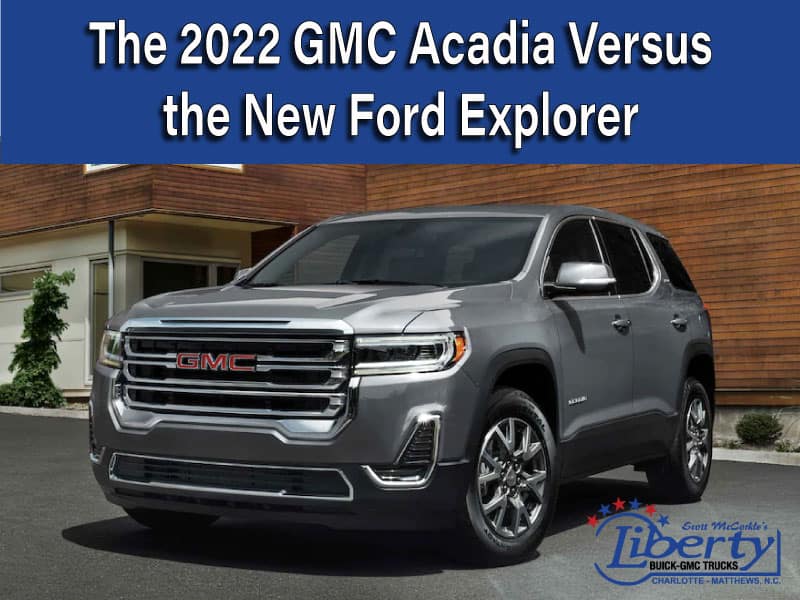
The 2022 GMC Acadia Versus the New Ford Explorer

New 2022 GMC Acadia Near Me
The 2022 GMC Acadia joins the ranks of other modern top-notch, well-to-do SUV crossovers as a high-performing driver, and successfully pits itself against some of the very best—namely the newest iteration of the Ford Explorer. It was only a matter of time until the Acadia began to get its due notoriety for expert performance and features as a crossover vehicle, and now it comes with a cool new look as well. The GMC Acadia is presently in its second year of production as an SUV crossover, joining the ranks with Buick’s Enclave, Cadillac’s XT5 and XT6, plus Chevy’s Blazer and Traverse models. But its biggest rival is the Ford Explorer. Both the Acadia and the Explorer are popular among families, large and small, and both offer plenty of punch and swagger at an affordable price. But which is the better choice? Let’s take a close look at both in order to find out which SUV/crossover comes out on top.  

Similarities & Differences

The 2022 Acadia and the 2022 Ford Explorer are similar vehicles, but since they are made by different American car companies, certain aspects are favored over overs in terms of production, capability, etc. Often, when attempting to choose between two similar vehicles, the determining factor comes down to style, comfort, and convenience to name a few. • Comfort: Both vehicles offer roughly the same amount of room in the rear seating—plenty of headspace and area to stretch and get comfortable. In the front, the Explorer has a little more head and legroom, but both offer maximum comfort with plush seating for all passengers in every trim level. • Convenience: The all-new Acadia and new Explorer offer tons of features to make things more convenient: keyless entry, remote start, seat warmers, touchless calling and texting, and the list goes on and on. One thing to note is that the 2022 Acadia does offer better gas mileage than the 2022 Explorer—more specifics on this a little later. • Cost: The price of either of these vehicles can fluctuate quite a bit dependent on the trim level, extra features, etc. you choose. With that in mind, the Manufacturer’s Suggested Retail Price is $33,745 for the 2022 Explorer and $34,800 for the 2022 Acadia, so clearly both rest in the same price range. • Dimensions: The Explorer is a bit wider in stature than the Acadia, which means the former eats up more of the road and makes parking in tighter spots difficult. Not to imply the Acadia is small, it’s definitely a full-bodied crossover—but it is a little easier to navigate, especially in the city, than the Explorer. • Performance: Though the 2022 Explorer has slightly more power under the hood, we find that the Acadia is a bit smoother in the ride. Both pack a punch and offer a clean driving experience, but in this area of performance, each differs a bit. • Powertrain: A part of the reason the Explorer has more power is due to its low torque; however, this means it’s a bit slower off the line and a little less zippy than the Acadia. GMC went with a higher torque than Ford and this could be the reason for such a smooth, snappy ride. • Utility: Both the Acadia and the Explorer comfortably seat seven adults. This leaves plenty of room for everyone to feel like they aren’t shoved into a seat, elbow-to-elbow with another passenger. In the very back, the Explorer does have a slightly larger cargo area, which is nice when it comes time for traveling or grocery shopping.  

Getting Down to the Specifics

Now that we’ve gone over some of the basic similarities, let’s get into the details. Here are a few of the important categories that make the Acadia and Explorer stand out: Engine As stated earlier, the Explorer comes with more power due to its 300.0-hp, 2.3-liter, 4 cylinder engine (gasoline fueled). However, the Acadia’s 228.0-hp, 2.0-liter, 4 cylinder engine (gasoline fueled) is not far behind. Gas Mileage Notice that both vehicles come with powerful 4 cylinder engines, which means they will save you some money at the pump—a necessity these days. The Acadia’s combined MPG is 25 while the Explorer’s combined MPG is slightly lower at 24. Drivetrain The 2022 Ford Explorer uses rear-wheel drive, while the 2022 Acadia uses front-wheel drive. Both offer 4-wheel drive as well, but it is good to know what you will be using when out of 4-wheel. Rear-wheel can offer more power and front-wheel drive can offer more control. Which matters more to you? Exterior Color Options The Acadia comes with six color choices: Satin Steel Metallic; Infrared Tintcoat; Summit White; Blue Metallic; Mineral Gray Metallic; and Ebony Twilight Metallic. The Explorer offers six choices as well: Forged Green; Iconic Silver Metallic; Light Blue Metallic; Cobalt Blue; Oxford White; and Agate Black. Interior Color Options The new Explorer comes in only one interior color: the classic Sandstone. The new Acadia, on the other hand, comes with two options: Cocoa/Light Ash Gray and Ebony. *It’s also worth noting that the Acadia uses a Five-Link suspension, versus the Explorer’s Multi-Link. Also, the Acadia has a larger fuel tank at 19 gallons, compared to the Explorer’s 17.9-gallon tank.  

The 2022 GMC Acadia

Choosing between the Acadia and the Explorer is not an easy choice. But, with more aesthetic features, a smoother ride, and a slighter more compact size, the Acadia makes its way to the forefront for us. The 2022 GMC Acadia is already turning heads and impressing car reviewers with its multiple trim levels. The SLE-1, SLE-2, SLT-1, SLT-2, and the Denali trims are all packed with incredible features and capabilities. But what are the main differences between these levels? Here is a comparison of them all, highlighting what makes them unique. The SLE-1 and SLE-2 are the base level trims. But that is not to say they are basic in any way. Features that come standard with both include keyless open and start, automatic climate control, a color touchscreen with IntelliLink, a rearview camera, all-wheel drive, a 4-cylinder engine, and daytime running lights. The SLE-2 also has an available eight-speaker Bose sound system, a driver alert package, an optional V-6 engine, and a 2-panel power sunroof. Moving upwards to the SLT-1 model, many of the add-on features for the SLE-1 and 2 come standard. The sound system, alert package, and V-6 engine all come with the SLT-1. It also comes with more safety options, such as rear cross-traffic alert, rear park assist, and side blind zone alert. The Price for the SLT-1 is a little over $4,000 more, but for what this price includes, it is worth it.
The biggest difference between the SLT-1 and the SLT-2 is safety. The SLT-2 comes with more options, like front pedestrian braking, lane keep assist, front and rear park assist, forward collision alert, and following distance indicator.
There are also a few features that come standard with the SLT-2 that do not with the SLT-1. These are a 3.6 ratio axle chassis, a 170-amp alternator, a heavy-duty cooling system, dual-outlet exhaust, and a trailering package. Finally, to the venerated Denali. This is the 2022 GMC Acadia’s top trim level, and what it includes that the other levels do not are an 8” color touchscreen with IntelliLink and navigation, and a standard listing of all the safety features, except for rear park assist. It also comes standard with a leather-wrapped steering wheel, heated rear seats, and IntelliBeam headlights. The best thing about the 2022 GMC Acadia is that Liberty Buick GMC has all five trim levels waiting for you to test out. Come on by and find the style of GMC Acadia that is best for you.  

Posted in:

Related Posts

Car Theft Prevention in Charlotte: GMC Anti-Theft Features and Tips

How to Protect Your Car in Charlotte: GMC Anti-Theft Features and CMPD Tips

Charlotte Car Thefts Are Down 31%. Here's How to Stay on the Right Side of That Number According to Charlotte Mecklenburg Police Department (CMPD), there were 2,163 vehicle thefts in Charlotte during the first six months of 2026. That works out to approximately: 83 vehicles stolen every week. Almost 12 vehicles every day. And that's actually good news compared with last year: CMPD says vehicle theft was down 31% during the first half of 2026. In the same six-month period of 2025, there were 3,127 vehicle thefts. Good habits are the first line of defense, but newer GMC vehicles also offer technology designed to make stealing the vehicle more difficult and help owners respond if a theft occurs. CMPD recommends: Always lock your doors and completely roll up your windows. Never leave the vehicle running unattended, even briefly. Take your keys with you, including valet keys, and never hide a spare key in or underneath the vehicle. Remove valuables from the vehicle entirely. CMPD specifically mentions phones, purses, briefcases, backpacks, cash and even loose change. When shopping, put packages in the trunk rather than leaving them visible inside the passenger compartment. Do not leave registration or insurance cards in the vehicle. Park in a well-lit area, preferably somewhere with surveillance. At home, park in the driveway rather than on the street when possible. Consider an alarm or other theft-deterrent device. CMPD specifically recommends a steering-wheel lock as an additional theft deterrent. They say locks may sometimes be available free from CMPD division offices, depending on supply. Even common sense and good law enforcement advice can’t prevent every incident, but it pays to know the facts. In addition to good habits did you know that GMC vehicles come with many anti-theft and security features built in?  Moreover, GM offers OnStar plans that fit your lifestyle and your budget. At Liberty Buick GMC, our inventory offers a range of available anti-theft and security features. Some come standard and are ready to drive off the lot, unless, of course, you’re stealing them. Anti-theft & Security Features Defined: Theft-Deterrent System (Alarm) The car's built-in alarm. If someone opens a door, hood, or trunk without the key fob, or breaks in, the horn honks and the lights flash to scare them off. It arms itself when you lock the vehicle and shuts off when you unlock it with your fob. Engine Immobilizer A digital handshake between your key fob and the engine. If the car doesn't recognize your fob's unique code, the engine won't start, even if a thief gets inside or tries to hot-wire it. OnStar Basics GM's entry-level connected-services package, usually included on new vehicles for a set trial period. It covers core safety and security services, like crash notification and stolen vehicle help. Some extras (like remote app commands or Wi-Fi) may need a paid upgrade after the trial. Automatic Crash Response If the car detects a serious crash (like an airbag deploying), it automatically contacts an OnStar advisor. The advisor tries to reach you, and if you don't answer or need help, they send emergency responders to your GPS location. Remote Vehicle Commands (Lock/Unlock, Start, Locate) Using the myGMC app on your phone, you can lock or unlock the doors, start the engine (handy for warming up or cooling down), or find the car, all from wherever you are. Locate can also flash the lights or honk the horn to help you spot it in a parking lot. Vehicle Location The vehicle's GPS tracking. It lets you (in the app) or OnStar (if you report a theft) see where the vehicle currently is, so you're never guessing after a theft or a forgotten parking spot. Stolen Vehicle Assistance If your vehicle is stolen, you report it to police, then call OnStar. Advisors work with law enforcement to use the vehicle's GPS to track it down and help get it recovered. Stolen Vehicle Slowdown Once police are involved and confirm it's safe to proceed, OnStar can gradually reduce the stolen vehicle's engine power so it slows to a stop. It doesn't shut the engine off suddenly, which avoids putting the thief or others in danger, and it ends a chase before it starts. Remote Ignition Block If the stolen vehicle is turned off, OnStar can send a signal that prevents it from being restarted. The thief is left with a car that won't go anywhere until police arrive. HD Surround Vision / Security Cameras A set of exterior cameras stitched together into a bird's-eye view on your screen. It's mainly a parking and maneuvering aid, helping you see around the vehicle, but it also gives you better awareness of your surroundings. Actual "security camera" recording features vary by model, so confirm what your trim includes. Teen Driver Parental controls for the car. When a teen's key fob is registered, you can set speed alerts, cap the audio volume, and keep certain safety systems switched on. The car can also give you a "report card" of their driving habits, like hard braking or speeding. It can even mute the radio until seat belts are buckled. Super Cruise GM's hands-free driving assistance for compliant highways. It steers, accelerates, and brakes while you keep your eyes on the road. A driver-facing camera watches your attention and alerts you if you look away too long. It's a convenience and safety feature, not an anti-theft one. 2026 GMC Anti-Theft & Security Cheat Sheet Feature What it does Needs OnStar plan? Theft-Deterrent System (Alarm) Honks and flashes lights if a door, hood, or trunk is opened without your fob No Engine Immobilizer Engine won't start unless it recognizes your fob's code No OnStar Basics Entry-level connected services (crash and theft help), usually a trial period Yes (trial, then paid) Automatic Crash Response Detects a serious crash and connects you to an advisor, who sends help to your GPS location Yes Remote Vehicle Commands Lock, unlock, start, and locate the vehicle from the myGMC app Yes Vehicle Location GPS tracking so you or OnStar can see where the vehicle is Yes Stolen Vehicle Assistance OnStar works with police to track and recover a stolen vehicle Yes Stolen Vehicle Slowdown With police involved, OnStar gradually reduces engine power to stop the vehicle safely Yes Remote Ignition Block Prevents a stolen vehicle from restarting once it's turned off Yes HD Surround Vision Bird's-eye camera view for parking and awareness (not a recording security system) No Teen Driver Speed alerts, volume limits, and a driving "report card" for registered teen fobs No Super Cruise Hands-free highway driving with a driver-attention camera (convenience, not anti-theft) Yes (subscription after trial) Ready for a GMC with more than performance, comfort and style in mind? Visit Liberty Buick GMC in Matthews to explore our selection of new GMC vehicles and the anti-theft and security features available on each model. Our team can show you what comes standard, what additional protection is available and help you find the GMC that fits the way you drive. Because the best vehicle security starts before you ever leave the lot.

2024 GMC Acadia VS Honda Pilot

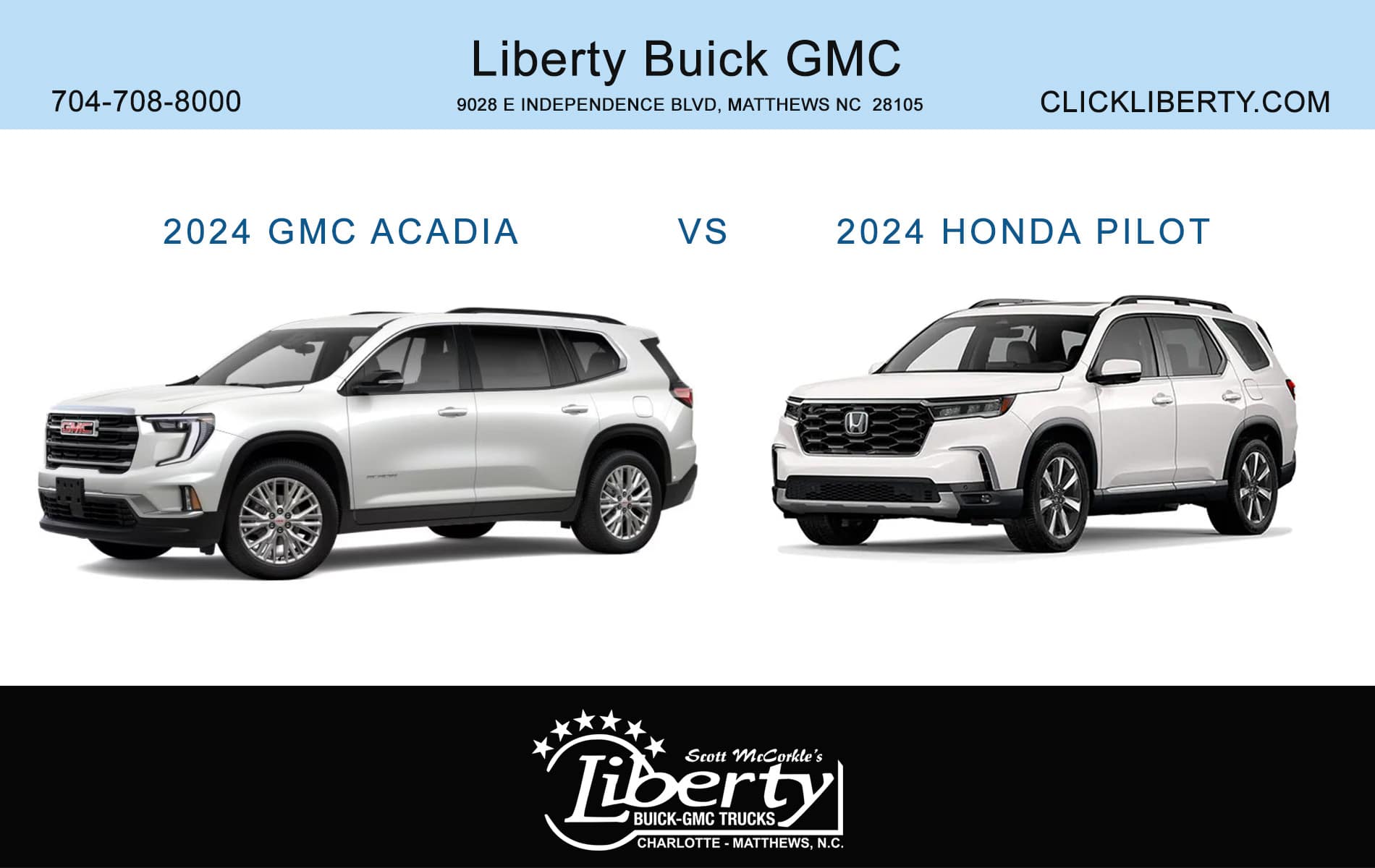
The 2024 GMC Acadia vs The 2024 Honda Pilot

The 2024 GMC Acadia vs The 2024 Honda Pilot Two stalwarts in the SUV game, the GMC Acadia and the Honda Pilot both boast big sales and happy drivers. But of the two, which is the better purchase? It’s hard to say which is better with vehicles so similar, and individual tastes will ultimately determine which is best for you, but there are a few clear distinctions between the two that might catch your attention. A Quick Comparison In terms of comfort, the 2024 GMC Acadia and the 2024 Honda Pilot both offer about the same in comfort, but the 2024 Acadia has a little more head- and legroom, making it slightly roomier than the 2024 Pilot. In terms of convenience, you will make less stops at the gas station with the Acadia, which saves you money in the long run as well. When considering the price tags for these two vehicles, the Manufacturer’s Suggested Retail Price is lower for the Acadia than it is for the Pilot–this is yet another check for GMC. Specifically, the Acadia has an MSRP of $36,800-$50,600 while the Pilot’s suggested cost is around $39,900-$54,280. looking at the dimensions and handling, there are some bigger differences between the two. For example, the 2024 Acadia is slimmer in size than the 24 Pilot, making the GMC much easier to navigate through tight quarters and tricky parking spaces. The Acadia is also shorter in length than the Pilot, which adds to the ease of navigating around town. Though the Acadia is slightly smaller in size, it has a larger turning radius than the Pilot. This adds to the ease of driving the GMC, as maneuvering in and out of tight spots is easier. When it comes to performance, the Pilot has more horsepower than the Acadia, but due to the Acadia’s higher torque, it does a better job than the Pilot of transmitting the engine’s horsepower to its wheels. The Specifics Here is a breakdown of the specs for the two vehicles so you can get a better picture of how the 2024 GMC Acadia and the 2024 Honda Pilot differ from each other. Miles Per Gallon–City Acadia: 19-22 MPG Pilot: 18-19 MPG Miles Per Gallon–Highway Acadia: 26-29 MPG Pilot: 23-27 MPG Seating Acadia: 7 seats Pilot: 7-8 seats Cargo Space Acadia: 79 cubic feet Pilot: 86.5-87 cubic feet Engine Acadia: 228 horsepower, 2.0-liter, 4 cylinder (gas) engine or 310 horsepower, 3.6-liter, 6 cylinder (gas) engine Pilot: 285 horsepower, 3.5-liter, 6 cylinder (gas) engine Drivetrain Acadia: All wheel drive/front wheel drive Pilot: All wheel drive/front wheel drive Exterior Length Acadia: 193.4 inches Pilot: 199.9-200.2 inches Exterior Width Acadia: 75.4 inches Pilot: 78.5 inches Legroom Acadia: front–41 inches; rear–39.7 inches Pilot: front–41 inches; rear–40.8 inches Head Room Acadia: front–40 inches; rear–39.6 inches Pilot: front–39.1-40.5 inches; rear–39.2-40.2 inches The 2024 GMC Acadia Our winner between the Acadia and the Pilot is the 2024 GMC Acadia. And it’s not only us who thinks this way, the all-new Acadia is turning heads and impressing car reviewers with its multiple trim levels: The Elevation, Elevation Premium, AT4, and the Denali trims are all packed with incredible features and capabilities. Here is a closer look at the four trim options you have when purchasing the 2024 GMC Acadia: Elevation To be fair, all four trims are substantial and impressive. To call the Elevation the base-trim level implies it’s bare bones, but this couldn’t be further from the truth. At this first level, the Acadia is powered by a 2.5-liter turbocharged engine with 328 horsepower and 326 lb-feet of torque, and you have the option to go with 7- or 8-passenger seating. Most notably, it comes with a 15-inch diagonal premium GMC Infotainment System at no extra cost. Yes, you read that correctly. You do not have to pay for this as an add-on feature since GMC decided to put its most advanced touchscreen in the base level of the Acadia at no extra cost. Maybe we should consider the Elevation as the not-so-base trim level. Elevation Premium Picture this: a brand new SUV with 20-inch wheels and an immaculate interior with fold-flat captain’s chairs (in the back row) and about every technological feature you can imagine. This is the 2024 Acadia Elevation Premium trim level. It also comes with Smart Slide so you can manipulate interior seating to fit your specific needs. What is most impressive with Elevation Premium is the Super Cruise, one of the most advanced automated driving systems on the market today. This is one of our favorite safety features, as it enhances the regular cruise control by incorporating specialized sensors and radar technology so that your car can adapt to the driving conditions around it. For example, once you have set the preferred distance between your car and those ahead of it, Super Cruise will speed your car up or slow it down in order to maintain that distance. AT4 Consider the AT4 as the Off-roading package. This adventurous trim level comes in a dark-accented exterior color, a new Forest Storm interior, and a new rugged suspension design that allows for extreme off-roading. The 2024 Acadia AT4 comes with a raised suspension, but just how raised we do not know yet, as GMC has not officially announced how high the AT4 will sit. You can trust that this version of the Acadia will be tougher than it has ever been though. When GMC goes rugged, they go all out. Denali GMC’s most popular trim level is the famous Denali level. The Denali always comes fully loaded, as in everything you could imagine being packed into an SUV, this one has. Not to say it’s gaudy or busy, it’s actually quite luxurious and sophisticated, yet accessible to anyone. On the exterior, it comes with 20-inch aluminum wheels and the classic Denali grille with Galvano silver accents through the exterior body. Inside, there is premium leather seating that might be the most comfortable in any high-level SUV. Since the Denali trim level has been around for some time, and largely celebrated since its creation, you can trust that GMC has not pulled any punches with the 2024 model. A word to the wise–when you test drive the Acadia’s, don’t start with the Denali, start with the Elevation and work your way up the levels. If you drive the Denali first, you probably won’t want to drive anything else. It may be hard to believe but there are plenty more optional features to be added on to the 2024 Acadia’s trim levels. Here are a few of our favorites: Enhanced Automatic Emergency Braking When driving below 50 miles per hour, this feature will alert you if there is the potential for a front-end collision, and it will also automatically apply emergency braking if the driver does not respond quickly enough. Safety Alert Seat This specialized seat vibrates and pulses at the bottom of the seat for various warnings—this is an option instead of having auditory or visual warnings. This is a great option to keep you safe when you have a car full of talkative kids, or you feel like blasting your favorite song. Front and Rear Park Assist Park assist detects objects or people around you when you are driving at low speeds. Typically, it gets used when parking or navigating through congested areas. We have found this feature to improve even the worst of parallel parkers. High Definition Surround Vision This digital bird’s-eye view comes at high definition and gives a crystal-clear image of the area around your vehicle when driving at low speeds. The image of your area pops up on the Infotainment display, helping you to avoid objects and perfectly park in just about any spot. Stop in and see us at Liberty Buick GMC today and test drive all four styles of Acadia to see which is the best fit for you.

ADAS Service Repair Center

Everything You Need to Know About Advanced Driver Assistance Systems (ADAS)

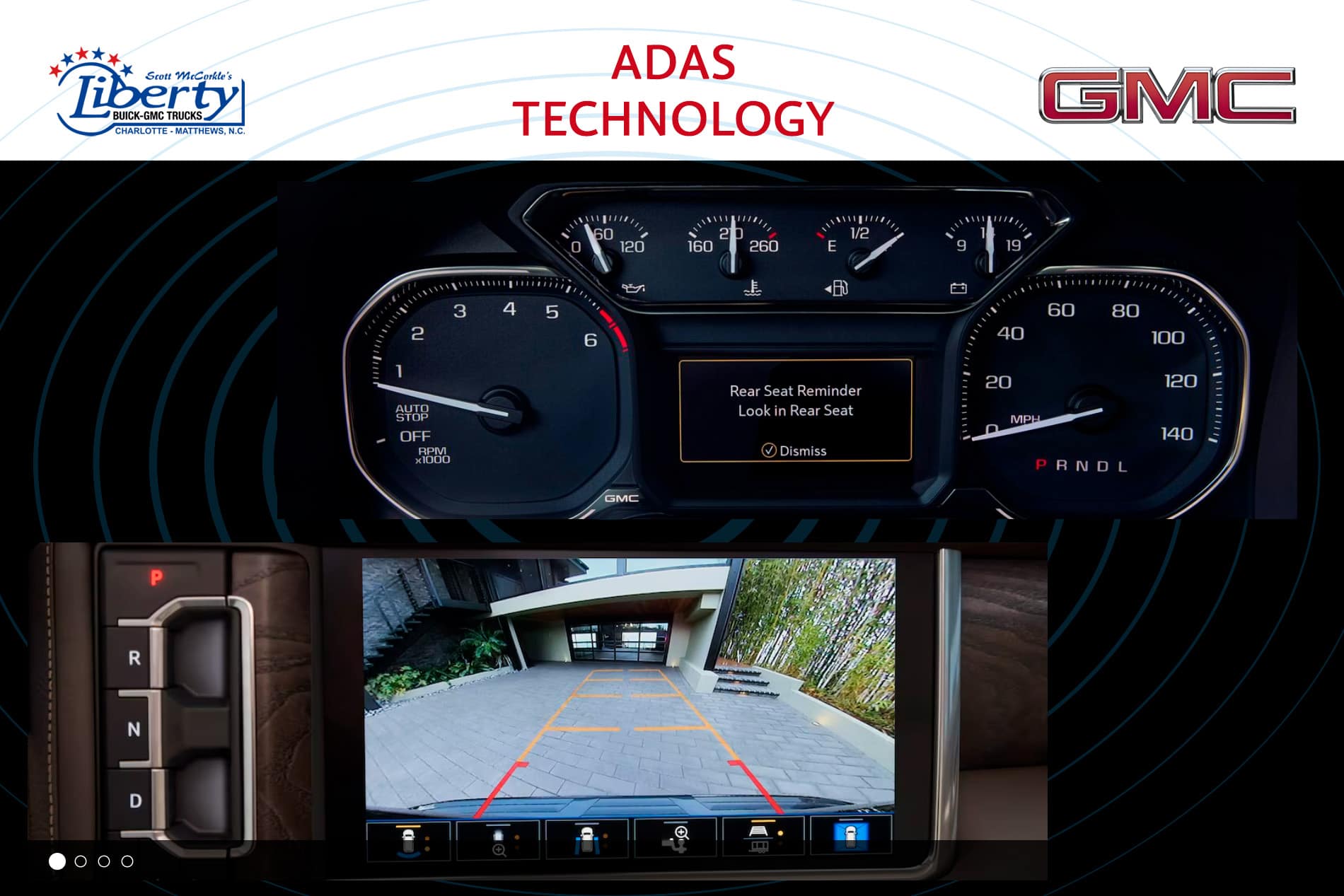
As artificial intelligence continues to advance and integrate itself into the automotive industry, we find ourselves experiencing a much different driving experience than ever before. We can now communicate with our vehicles, even before we enter the car, to heat or cool the interior, to play our favorite music and podcasts, and we can now rely on AI to take care of some of the more complicated aspects to driving, such as the act of driving itself. Car drivers are entering the age of driver assistance systems, which are AI-integrated programs created to take over some of the more laborious aspects of driving. It is safe to say that we are entering a period in time where both humans and AI team together in order to create a brand new driving experience–one that is easier and safer for everyone. Advanced Driver Assistance Systems, or ADAS, are various technologies created to improve the driving experience, namely to promote vehicle safety. This process involves the implementation of automated assistance to the driver in order to help reduce the possibility of human error. This is done by using sensors, cameras, radar, and other advanced tech features to monitor the vehicle’s surroundings at all times and to assist in various driving tasks–such as adaptive cruise control, lane-departure assistance, automatic emergency braking, and parking assistance. For some car companies, like GMC, these advanced systems are nothing new, though they are being updated often. The availability of specific assistance features can depend on the trim level and options chosen for each vehicle, but a variety of them can be found in most versions of GMC’s Sierra, Yukon, Terrain, Acadia, and Canyon. Before we get into some details on how these systems work, let’s have a look into how incorporating ADAS can benefit both drivers and passengers: Improved Safety: we can already see how ADAS helps prevent car accidents by providing safety assistance to drivers through the use of emergency braking, lane departure warning, and adaptive cruise control. Enhanced Convenience: ADAS can make the driving experience more comfortable and less stressful by assisting with tasks such as maintaining a safe distance behind other vehicles, keeping your vehicle centered in its lane, and aiding in parking maneuvers, such as the dreaded parallel parking. Reduced Driver Fatigue: by incorporating ADAS, drivers can get alerts and assistance when necessary if experiencing fatigue. These technologies can keep drivers from falling asleep and/or get them to pay attention to certain aspects of driving–for instance, if there is flooding, icy conditions, animals crossing, etc. Potential Insurance Discounts: some insurance companies offer discounts for vehicles equipped with ADAS, as these technologies have already proven their ability to reduce the likelihood of accidents and even minimize potential damage in the case of an actual collision. Environmental Benefits: certain features to ADAS, such as adaptive cruise control, can help with fuel efficiency by maintaining a consistent speed and following distance. Over time, this can lead to a drastic reduction in fuel consumption. Lower emissions means your car is better for the environment, and you are able to save money by vising the gas station less often. Assistance for Drivers with Disabilities: ADAS can provide helpful assistance to drivers with disabilities by helping them operate aspects of the vehicle through automated prompting, the use of warning lights, etc. It can also assist those with limited mobility by setting itself to take care of things like the usage of blinkers and headlights without the prompting of the driver. Clearly, ADAS plays a crucial role in improving road safety and enhancing the driving experience, and this process of technological integration is only starting–who knows what the future holds! How ADAS Works Integrated systems such as ADAS are quite complicated, but gaining a basic understanding of how they work can better inform drivers on how and when to use them. On the most basic level, ADAS uses a combination of sensors, cameras, radar, lidar, and software algorithms to monitor the vehicle’s surroundings. All of these technologies are used to assist the driver. Here is a general overview of how it all works: Sensors and Cameras– Small sensors and cameras are strategically placed around the vehicle so that they can continuously collect data on the car’s surroundings, including nearby vehicles, pedestrians, road markings, traffic signs, and obstacles. Data Processing– The data collected by sensors and cameras are processed in real-time through the use of onboard computers. These computers use special algorithms to analyze the data received in order to identify objects on or around the road, detect potential hazardous situations, and to assess the vehicle’s position in relation to the road and other vehicles. Decision Making– Once incoming data has been processed, ADAS make decisions about the appropriate actions to take so that the driver is assisted and safety mechanisms are enhanced. For example, if it is detected that the vehicle is drifting in and out of its lane without signaling, lane departure warnings and/or the steering assistant may be employed in order to alert the driver and to keep the vehicle in its proper placement on the road. Driver Feedback and Intervention– One of the great aspects to this sort of enhanced driving system is that ADAS provide feedback to the driver through visual, auditory, and haptic alerts in order to inform them of potential hazards in the moment. Not only that, but in some cases ADAS can also intervene directly by applying the brakes, adjusting steering, even by controlling the vehicle’s speed. Integration with Vehicle Controls– Most often, Advanced Driver Assistance is integrated with the vehicle’s existing control systems–like braking, steering, and throttle–so that there is active vehicle control when necessary without the prompting of the driver. Essentially, this means that ADAS does not have to wait for human interaction for it to kick in. Which makes sense if you are heading towards danger without knowing it, you want your vehicle to know to apply the brakes whether your foot hits the brake pad or not. Continuous Monitoring and Improvement– What’s so great about ADAS is that it is continuously working. It is always monitoring the vehicle’s surroundings and performance–even if you are not–and it knows to adapt and change driving conditions, and this effectiveness is actually improved over time. Manufacturers regularly update ADAS software to enhance performance, address potential issues, and introduce new safety features. One other feature we love about the incorporation of ADAS is that if repairs or calibration are needed for the ADAS system in GMC vehicles, a quick trip to the dealership is all that is required. Once on site, a certified technician can calibrate and/or repair any necessary areas. And there is no guesswork here, as your ADAS will let you know if there is some necessary repairs or adjustments needed so that there is no compromise in the effectiveness of the system. The future is upon us, and driving is about to look a whole lot different. Are you ready to incorporate ADAS into your daily driver? It’s time.